Autore: editor-peco

  • Executive First Level Master in Global Public Diplomacy and Sustainable Development

    Executive First Level Master in Global Public Diplomacy and Sustainable Development

    Description:

    Offered jointly by Luiss School of Government (SOG) and UNITAR (United Nations Institute for Training and Research), the Executive Master in Global Public Diplomacy and Sustainable Development provides participants with advanced theoretical, practical, and strategic tools to engage in diplomacy beyond borders. The program emphasizes the intersection between public diplomacy, sustainable development, and multilateral cooperation, fostering the capacity to design and implement policies in areas such as governance, human rights, migration, climate, and regional integration.

    Specifically, it addresses Italy–Africa relations within a global framework, exploring how diplomatic practice can contribute to sustainable growth, stability, and equitable partnerships. Through blended instruction (in-person and online), the curriculum combines thematic modules, case studies, and exercises in diplomacy to build skills in negotiation, multilateral engagement, policy design, and geopolitical analysis.

    This master is tailored for professionals and mid-career practitioners (e.g. diplomats, public officials, international agency staff) who wish to deepen their understanding of diplomacy in the contemporary global context, especially with a focus on sustainable development and cooperation.

    Director

    Raffaele Marchetti
    Raffaele Marchetti

  • Intensive Preparatory Course for the Diplomatic Career Examination (Rome Campus)

    Intensive Preparatory Course for the Diplomatic Career Examination (Rome Campus)

    Description:

    This Rome-based edition of the Intensive Preparatory Course for the Diplomatic Career Examination, offered by the LUISS School of Government, is designed to guide and prepare aspiring diplomats through an integrated path of theoretical rigor and practical training. The program focuses exclusively on the needs of those aiming to succeed in Italy’s diplomatic competition, delivering targeted modules in:

    • History and theory of international relations
    • Public international law and European Union law
    • Global economics, multilateral institutions, and foreign policy
    • English and secondary foreign language skills (French or Spanish)

    Director

    Francesco Cherubini

    Francesco Cherubini

  • Executive Course in Strategic Affairs

    Executive Course in Strategic Affairs

    Description:

    The Executive Course in Strategic Affairs at the Luiss School of Government offers an advanced and interdisciplinary training program focused on the analysis of global strategic dynamics and security policies. Developed in collaboration with the Italian Presidency of the Council of Ministers – Department of Security Information (DIS), the course provides participants with the conceptual and analytical tools needed to interpret complex international scenarios and support decision-making processes in public and private institutions.

    Through a combination of lectures, case studies, and interactive seminars, the program explores the intersection between politics, economics, law, and technology in shaping contemporary strategic environments. Participants are introduced to key issues such as geopolitical competition, national and international security, and the strategic use of innovation and intelligence.

    Designed for graduates, professionals, and public officials, the course promotes a multidisciplinary and applied understanding of international affairs. It aims to strengthen Italy’s analytical and strategic capacity by forming a new generation of experts capable of anticipating and managing global challenges.

    Director

    Raffaele Marchetti

    Raffaele Marchetti

  • Master in OSINT Analysis, Digital Research and AI Technologies

    Master in OSINT Analysis, Digital Research and AI Technologies

    Description

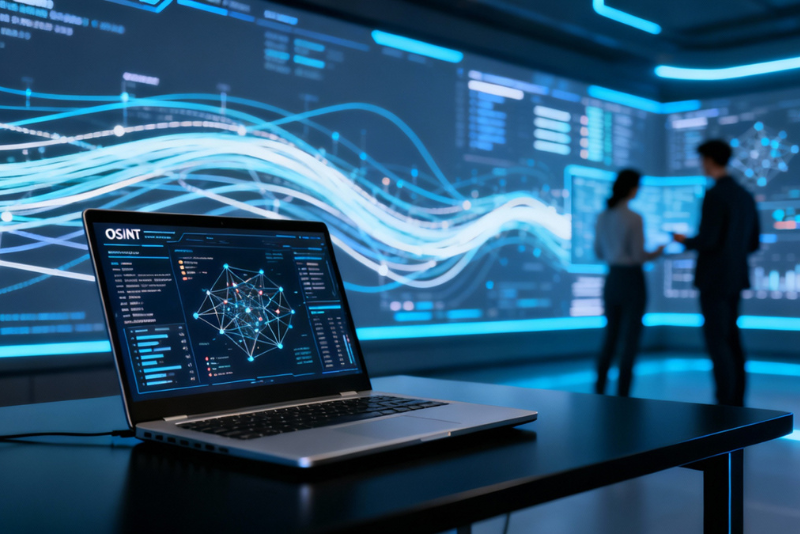
    The Master in OSINT Analysis, Digital Research and AI Technologies, offered by the Luiss School of Government in collaboration with the Italian Presidency of the Council of Ministers – Department of Security Information (DIS) provides an advanced and interdisciplinary training path in the field of open-source intelligence and emerging technologies.

    The program is designed to equip participants with the analytical, methodological, and technological skills required to collect, evaluate, and interpret information from open digital sources in complex international and security environments. Through a combination of theoretical lectures, case studies, and practical exercises, students explore how artificial intelligence and digital tools can enhance intelligence gathering and strategic decision-making.

    The curriculum covers a broad range of topics, from the fundamentals of OSINT and digital investigation techniques to AI-based data analysis and the ethical implications of information technologies. The program is particularly suited for graduates and professionals aiming to operate within governmental institutions, international organizations, research centers, or private entities engaged in security, defense, and digital innovation.

    Director

    Raffaele Marchetti
    Raffaele Marchetti

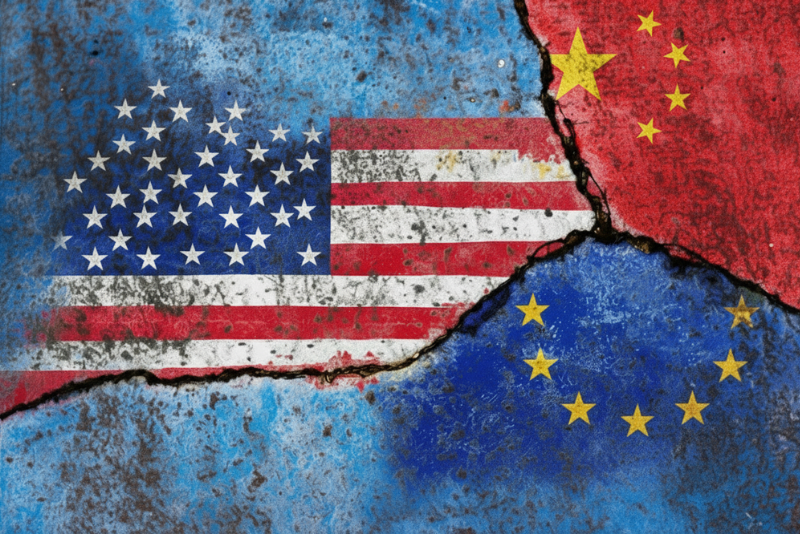
  • Friends or foes? Four scenarios for the next decade of the EU-PRC-USA relations

    Friends or foes? Four scenarios for the next decade of the EU-PRC-USA relations

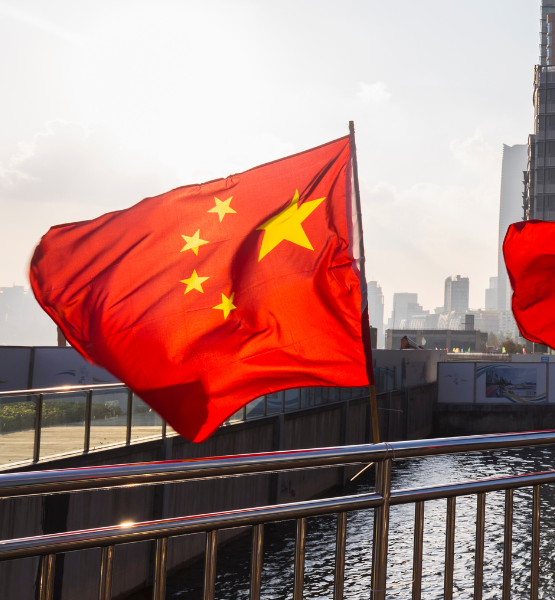
    In this report we apply the scenario building technique to shed light on the future relationship among China, EU, and the US. Scenario building is a structured method for exploring and anticipating the range of possible futures that might emerge from complex and uncertain environments. Rather than predicting what will happen, scenario building seeks to illuminate what could happen, providing a framework for strategic thinking, decision-making, and policy planning in the face of uncertainty. These scenarios help organizations, governments, and more general analysts, to recognize emerging risks, identify opportunities, and test the robustness of their strategies under different conditions[1]

    The objective is to understand possible dynamic developments with reference to the changing strategies and capacities of the actors at stake. Scenarios foresee different approaches the USA can have towards China and vice versa, with the UE in an external orbit. Three scenarios assume that the USA will maintain an assertive approach to China. One of these scenarios (The Bogged down world) describes a situation where tensions remain high, but they don’t escalate beyond current levels. In this scenario, the three actors can cooperate in a framework that alternate periods of openness and closeness. Two of these three scenarios assume that the USA will implement a stronger stance against China, in this case the EU could develop its own path of relations with China (The EU-China love story) or could instead strengthen its ties with the USA (The EU-USA love story) prompting a distancing from China. Finally, a scenario of convergence is considered (The Renewed world) where tensions ease and the three actors are able to cooperate within multilateral frameworks.

  • Transizione energetica: geopolitica e scelte strategiche nazionali

    Transizione energetica: geopolitica e scelte strategiche nazionali

    The energy transition, beyond its environmental dimension, carries profound geopolitical and strategic implications. It is redefining global power dynamics by creating new dependencies on clean technologies and critical materials such as lithium and rare earth elements, largely controlled by China. This shift moves the center of economic power and introduces new vulnerabilities, particularly for the West.

    Geopolitical tensions, such as the war in Ukraine, are accelerating this shift and prompting efforts to strengthen domestic supply chains, as demonstrated by initiatives like RePowerEU and the Inflation Reduction Act. Major global players (China, Russia, the US, and the EU) are pursuing divergent strategies, shaped by their resources, technological capabilities, and timelines. Key risks include new forms of dependency, intensified competition among regional blocs, and global fragmentation.

    Addressing these challenges requires integrated strategies that balance sustainability, security, and innovation. Investment in research, supply chain diversification, and international cooperation will be crucial to ensuring a secure, stable, and competitive transition—where the private sector will also play a pivotal role.

    This study explores the many dimensions of these challenges in depth.

  • Italy-Japan Relations in the 21st Century: Like-Minded Countries Amidst Global Challenges

    Italy-Japan Relations in the 21st Century: Like-Minded Countries Amidst Global Challenges

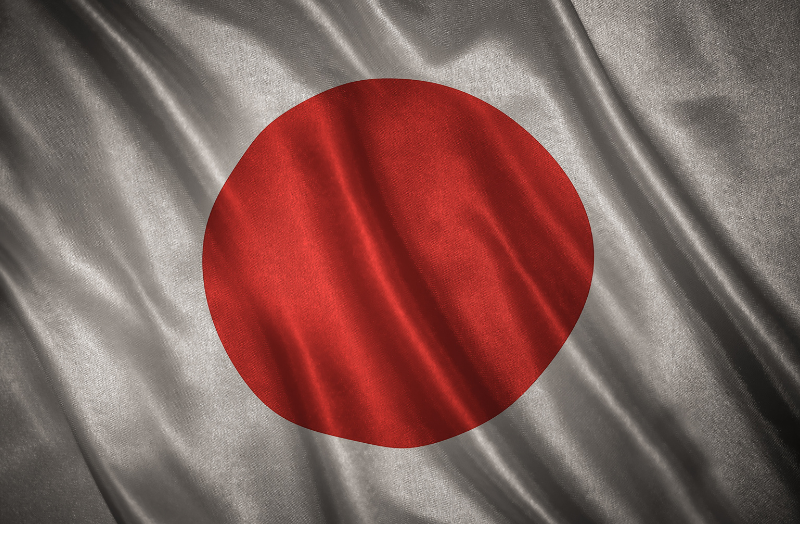
    This policy brief was produced as an outcome of the March 2025 conference “Italy–Japan Relations in the 21st Century: Like-Minded Countries Amidst Global Challenges” organized by the Center for International and Strategic Studies and supported by the Japan Foundation.

    The brief offers a comprehensive analysis of the evolving partnership between Italy and Japan against a backdrop of global geopolitical transformation. The document explores key drivers of their rapprochement, including shared values, economic and security interests, and coordinated responses to major challenges such as great power rivalry and regional instability. Combining historical perspective with forward-looking policy recommendations, the brief covers developments such as enhanced defense cooperation, joint technology and innovation initiatives (notably in semiconductors and aerospace), and the role of EU frameworks in facilitating deeper ties. Serving as a valuable resource for policymakers and researchers, it highlights opportunities for further collaboration as both countries navigate an increasingly uncertain international environment. Download the full report to access detailed analysis and recommendations shaping Italy–Japan relations in the 21st century.

  • 140 Years of Korea-Italy Relations, 1884-2024

    140 Years of Korea-Italy Relations, 1884-2024

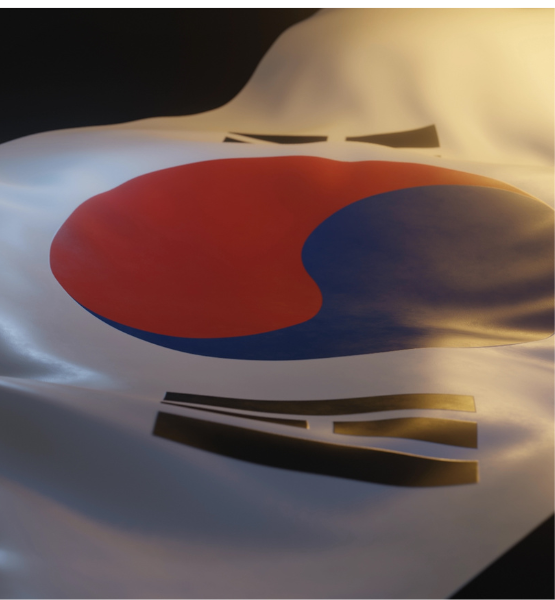
    In the year of the 140th anniversary of diplomatic relations between Korea and Italy, “140 Years of Korea-Italy Relations: 1884-2024 reflects on the path that has seen the two countries together since the establishment of diplomatic ties in 1884 and sheds light on the current state as well as the future prospects of our relationship, which today spans the political, security, economic, science and technology, cultural, and educational realms and indeed people-to-people exchanges.

  • La visione cinese dell’ordine internazionale: politica estera e pensiero tradizionale

    La visione cinese dell’ordine internazionale: politica estera e pensiero tradizionale

    In recent decades, East Asia has seen its role in international affairs grow, gradually transforming from an object of global and regional contention into a geopolitical hub capable of shaping the international order. This article is part of a broader collection on the Geopolitics of East Asia, which aims to highlight the perspective of China, one of the region’s major players.

  • Global Civil Society between Europe and Latin America

    Global Civil Society between Europe and Latin America

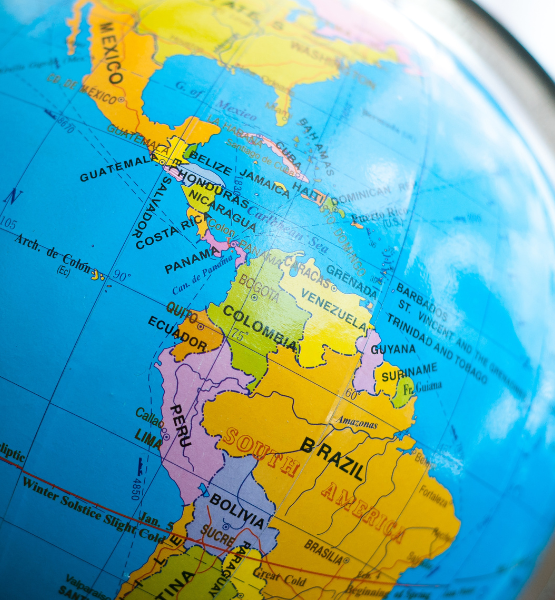
    This article explores the role of international non-governmental organizations (INGOs), particularly those aligned with public interests, within the global system traditionally dominated by states in the context of the EU-Latin America relations.

    Their increasing influence has reshaped global governance through activism and engagement across various sectors. The article outlines differing theoretical perspectives on global civil society, strarting form its very origins and then highlighting the impacts of globalization and post-Cold War international relations.