RusLab

The Russia Observatory (RUSLAB) is a dedicated research hub for the study of Russia, its domestic politics, historical trajectories, and international role, combining academic rigour with policy-relevant analysis and public-facing outputs. The research is situated within the broader debate on post-liberal contestation and the transformation of the international order.

RuLAB’s work aims to integrate close analysis of domestic governance, political economy, and social dynamics with a strong historical perspective rooted in Soviet and imperial legacies. It also examines how past institutional configurations, political cultures, and identity narratives continue to shape contemporary Russian politics and society.

Thematically, the Observatory covers four main interconnected areas:

  • Domestic politics and society — governance structures, center–periphery relations, regional identities, social stratification, ideological, religious and cultural evolutions, and the interaction between elites and the Russian society.
  • Russia–Europe relations — historical entanglements, energy interdependence, security architecture, and the reconfiguration of ties under war and sanctions.
  • The Eurasian space — relations with neighboring states, regional integration, and alignments involving China, Turkey, India, and other major Global South actors.
  • Global footprint — Russia’s political, economic, and security presence in Africa, the Middle East, and Russia’s role in reshaping the broader international order.
  • ochirizzi

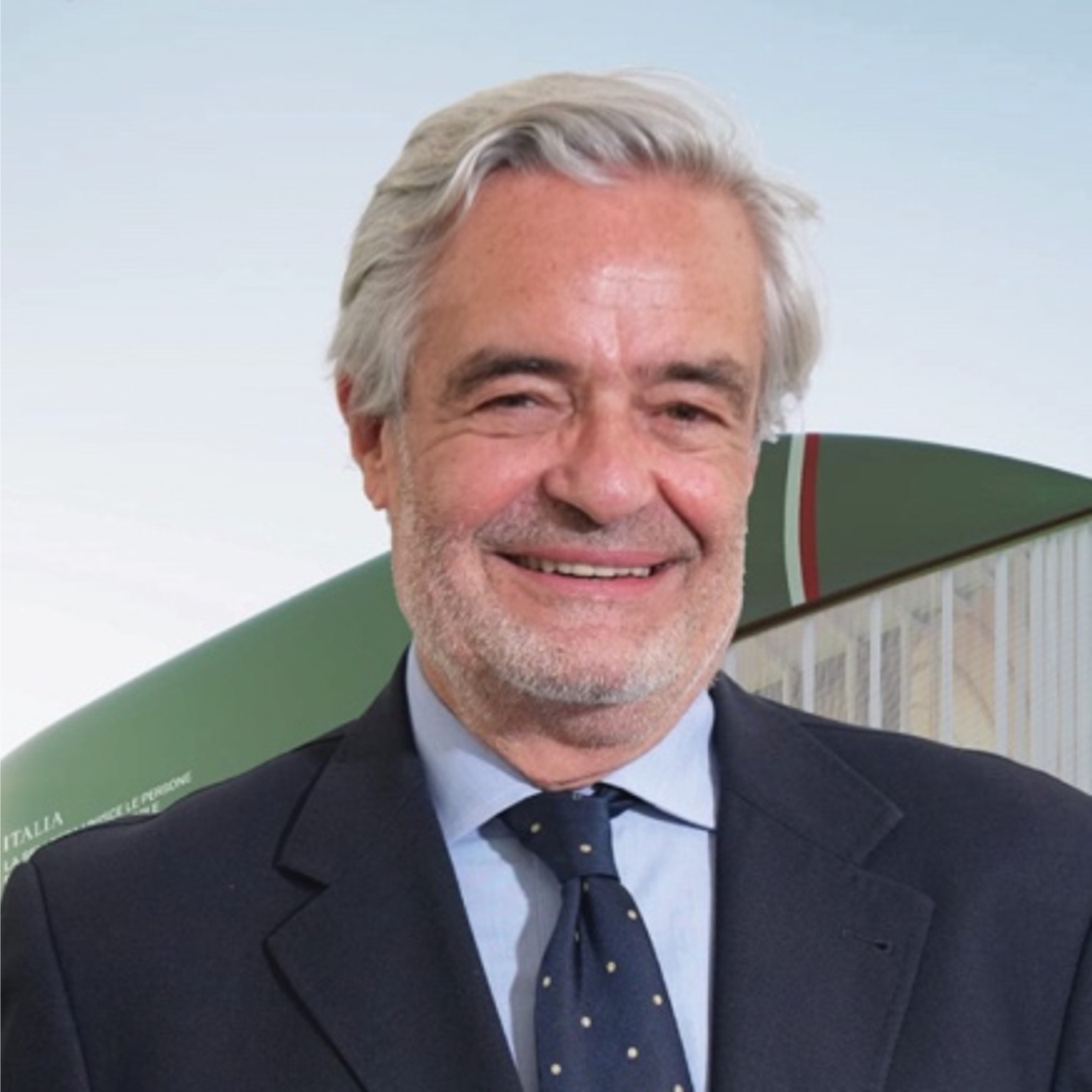
  • Paolo Glisenti

    Paolo Glisenti

    Paolo Glisenti is a journalist, international strategist, and expert in communication and large-scale event management, known for his leadership as Italy’s Commissioner General for Expo 2020 Dubai and Expo 2025 Osaka–Kansai. With a background in economic and financial journalism in London, New York, and Italy, he held senior executive roles in major multinational companies—including News Corp Europe and Montedison USA—and served on the boards of listed firms across media, telecoms, and pharmaceuticals. Founder of PGConsultants, he has advised governments, institutions, and corporations on communication strategies and international bids, playing a pivotal role in Milan’s successful campaign for Expo 2015, for which he was awarded the Knighthood of Merit of the Italian Republic. His work blends public diplomacy, strategic vision, and deep industry knowledge, making him a key figure in Italy’s global outreach and event diplomacy.

  • pcoadmin

  • Raffaele Marchetti

    Raffaele Marchetti (Laurea, Rome-La Sapienza; PhD, London-LSE) is Deputy Rector for Internationalization and Professor in International Relations at the Department of Political Science and the School of Government of LUISS. His research interest concerns global politics and governance, hybrid and city diplomacy, transnational civil society, (cyber-)security and political risk, and democracy.

    He acts as external expert for the European Commission and other public/private institutions on issues of global governance, public policies, civil society, and security. He is ISA’s United Nations-NGO Representative (2022-2024). He is also member of the editorial board of The International Spectator, the Academic Advisory Board of the Finnish Institute of International Affairs (FIIA), LabGov – the LABoratory for the GOVernance of the City as a Commons,  International Institute for Social and Economic Studies (IISES). He is the editor of the Routledge series Innovations in International Affairs and the Luiss University Press series Radar.

  • riaia

  • Rosario Forlenza

    Rosario Forlenza

    Rosario Forlenza specializes in the history of modern Europe and Italy in its global implications. He works at the intersection of history, politics and anthropology and focuses particularly on democracy and authoritarianism, political revolutions, nationalism and the politics of memory, politics and religion, symbolic politics, and the Cold War. He has written six books, co-edited two volumes, and published over forty peer-reviewed articles and chapters, most notably in The American Historical Review, Past & Present, and Journal of Contemporary History, He is currently working on a comparative history of revolutions from the perspective of political anthropology, on the totalitarian experiences in interwar Russia, Italy, and Germany, and on the global history of Christian Democracy.

  • sdarrigo

  • Silvia Menegazzi

    Silvia Menegazzi is Head of the AsiaLAB Research Unit and Assistant Professor in the Department of Political Science at Luiss Guido Carli University, where she teaches International Relations and Asian Studies. Her research interests span International Relations, Global Governance, and Area Studies, with a particular focus on the politics and economic development of Asian countries, especially China, Japan, and South Korea.

    She has held visiting scholar positions at Sciences Po (Paris), George Washington University (Washington, DC), the Department of Politics and International Studies (PAIS) at the University of Warwick, and China Foreign Affairs University (CFAU) in Beijing. Dr. Menegazzi has been the recipient of research grants and scholarships from several European and Asian institutions.

    She lived in China for more than four years and is fluent in Mandarin Chinese. Her work has been published in academic journals and media outlets, including International Politics, Global Society, Asia Europe Journal, East Asia Forum, and China Files. Among her most recent publications are China’s Blueprint for Global Leadership: GSI, GDI, GCI and Xi Jinping’s Vision for the International Order (Palgrave Macmillan, 2025, with M. Dian); La Cina e la politica globale (Mondadori, 2023); The NATO–South Korea strategic alignment and contemporary order-building, (International Politics, 2026, with T. Novotna).

  • Mark Thatcher

    Mark Thatcher is Professor of Politics, Department of Political Science, Luiss University, Rome, and was previously Professor of Comparative and International Politics at the London School of Economics. His research interests lie in comparative public policy and regulation in Europe. He is studying comparative policies towards cultural heritage, at both national and EU levels. Recent publications on cultural heritage policies include: Differentiated implementation and European integration: the development of EU food quality labelling’ (with Monica Garcia Quesada) (2023), West European Politics; ‘State museums raising their own resources: a comparison of the legal and managerial frameworks in Italy, France, and England’ (with Anna Pirri Valentini) (2022), Arte e Diritto 1(1): 53-79; -‘Direct and market governance paths for the creation of an EU political identity:  cultural heritage policy’, Comparative European Politics 17(4) (2019): 585-602 ‘The state and historic buildings: preserving “the national past”’, Nations and Nationalism (2018); -‘State production of cultural nationalism: political leaders and preservation policies for historic buildings in France and Italy’, Nations and Nationalism 24 (1), 2018, 64–87. 

  • Martina Carbonaro

  • Martina Lucaccini

    Martina Lucaccini is a PhD candidate in Cybersecurity and a teaching assistant at LUISS Guido Carli University. She is enrolled in a joint PhD program between LUISS and Sapienza. Her research focuses on cybersecurity and Internet controls. Currently, she investigates digital transnational repression targeting political exiles and diaspora communities. She received her MA in International Relations and European Studies at the University of Florence.

  • Mattia Zunino

    Mattia Zunino

    Mattia Zunino is postdoctoral researcher at the Department of Political Science at LUISS, where he also teaches Sociology of Communication. He holds a PhD cum laude in Politics: History, Theory and Science at the same university. He previously held a research fellowship at the University of Salerno and currently collaborates with the Sacred Convent of Assisi and the Italian National Forum of the Third Sector on training and tutoring initiatives aimed at civic and social actors. His research interests focus on political participation, media studies, and peace and conflict studies.

  • Mauro Gilli

    Mauro Gilli is a Senior Researcher at the Swiss Federal Institute of Technology in Zurich (ETH – Zurich). He received his PhD in Political Science from Northwestern University in 2015. His research interests include military technology and operations. His Twitter account is @Mauro_Gilli.

  • Michele D’Orazio

  • Michele Pertosa

    Michele Pertosa is a PhD Candidate in Politics and Teaching Assistant in bachelor’s and master’s level courses at Luiss Guido Carli University. His research focuses on Foreign Policy Analysis and Transatlantic Relations.

    Before joining academia, he gained professional experience at the Wilfried Martens Centre for European Studies and the European Commission’s Joint Research Centre, where he worked on technology, security, and defence policies in the context of European Strategic Autonomy. He also served as a Public Sector Analyst at Deloitte Consulting, assisting Italian regional authorities in the implementation of the European Structural and Investment Funds.

    Michele holds a Second Level Master’s degree in Diplomatic Studies from SIOI and graduated magna cum laude from a Double Master’s Degree program in International Relations (Luiss Guido Carli) and European Studies (University of Salzburg). His academic interests focus on processes of foreign policy change and the role of expert communities in shaping decision-making within international affairs.

  • Michele Petrone

    Michele Petrone

    Michele Petrone is a scholar in Islamic studies whose research focuses on Sub-Saharan Islamic traditions and the role of Sufism as a social network. His work examines the transmission of religious texts, devotional practices, and the formation of communal identities through Sufi orders, particularly in Ethiopia and the Horn of Africa. He analyzes how Sufi networks function as systems of knowledge circulation, spiritual authority, and social cohesion, often through manuscript culture and oral transmission. His studies also explore the intersection of Sufism with colonial and postcolonial dynamics, emphasizing the embeddedness of Islamic traditions in local contexts.

  • Mohammed Hashas 

    Mohammed Hashas[“ḥaṣ-ḥāṣ”] (PhD, Habil.) is a Lecturer in the Department of Political Science at Luiss University of Rome; he is currently a Research Fellow affiliate to Leibniz-Zentrum Moderner Orient (ZMO) in Berlin. His research areas are modern intellectual history of the Arab-Islamic world, Islam in Europe, and modern/contemporary Moroccan thought. Hashas has been a visiting research fellow in Copenhagen, Tilburg, Berlin, Oxford, and Winchester in Virginia. Hashas published The Idea of European Islam (2019), Intercultural Geopoetics (2017), and led the edition of Pluralism in Islamic Contexts (2021), Islamic Ethics and the Trusteeship Paradigm (2020), Islam, State and Modernity (2018), Imams in Western Europe (2018), besides various journal articles and book chapters. Hashas is currently finishing the editing of the first Handbook of Contemporary Moroccan Thought, for Brill 2023/4 (c. pp. 700). He contributes opinion essays in Arabic and English on religion, politics, philosophy and society in the Arab world (they are collected at his private website: www.mohammedhashas.com).  

  • Petrelli

    Niccolò Petrelli

    Niccolò Petrelli is Assistant Professor of Strategic Studies at the Department of Political Sciences, Roma Tre University, where he received his PhD in Politics in 2013. His research focuses on intelligence, national security, and defense capabilities. His X account is @NiccoloPetrelli.