RusLab

The Russia Observatory (RUSLAB) is a dedicated research hub for the study of Russia, its domestic politics, historical trajectories, and international role, combining academic rigour with policy-relevant analysis and public-facing outputs. The research is situated within the broader debate on post-liberal contestation and the transformation of the international order.

RuLAB’s work aims to integrate close analysis of domestic governance, political economy, and social dynamics with a strong historical perspective rooted in Soviet and imperial legacies. It also examines how past institutional configurations, political cultures, and identity narratives continue to shape contemporary Russian politics and society.

Thematically, the Observatory covers four main interconnected areas:

  • Domestic politics and society — governance structures, center–periphery relations, regional identities, social stratification, ideological, religious and cultural evolutions, and the interaction between elites and the Russian society.
  • Russia–Europe relations — historical entanglements, energy interdependence, security architecture, and the reconfiguration of ties under war and sanctions.
  • The Eurasian space — relations with neighboring states, regional integration, and alignments involving China, Turkey, India, and other major Global South actors.
  • Global footprint — Russia’s political, economic, and security presence in Africa, the Middle East, and Russia’s role in reshaping the broader international order.
  • gturco

  • gurciuoli

  • lraiti

  • Manfredi Valeriani

    Manfredi Valeriani

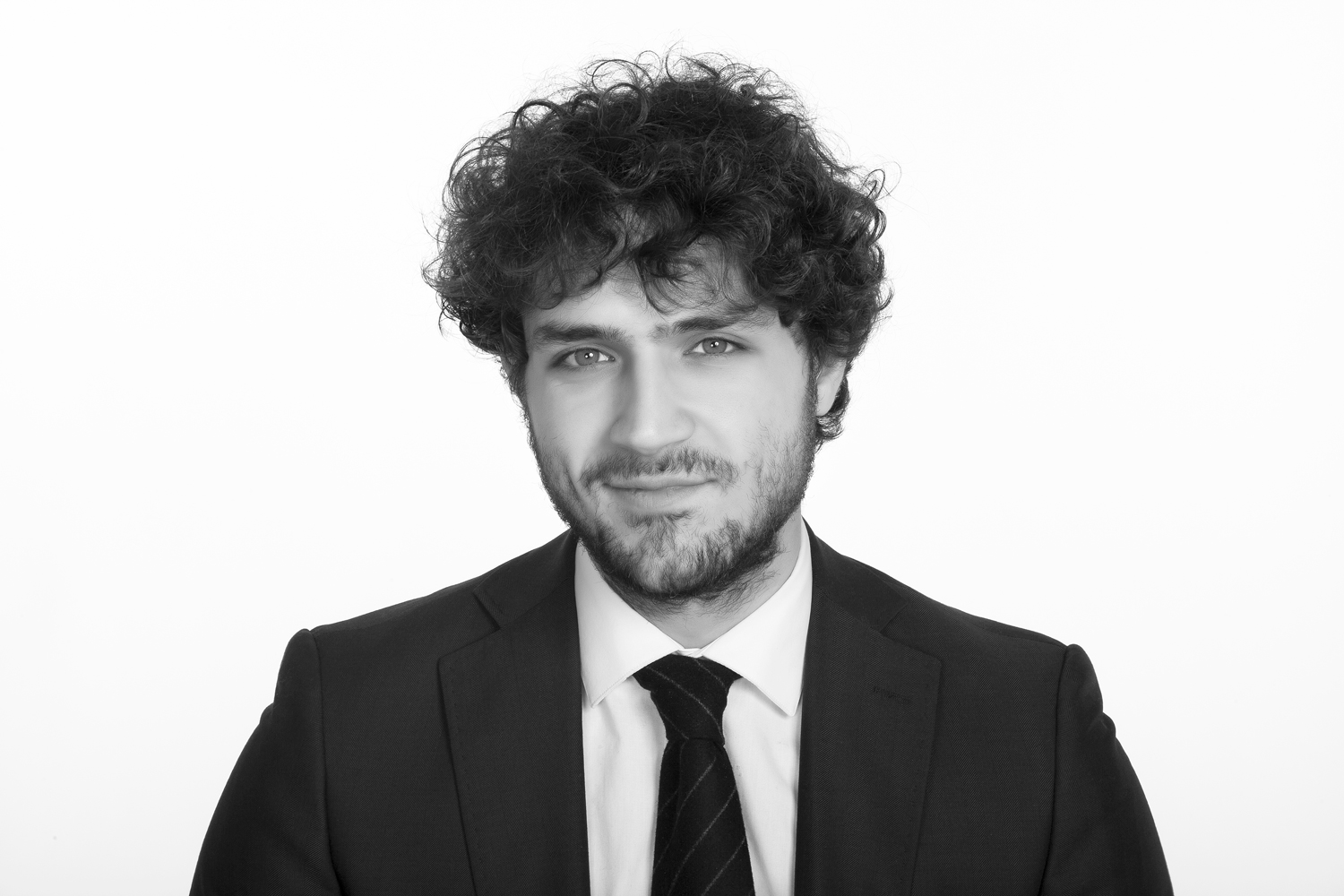
    Manfredi Valeriani earned his PhD at Hamburg University and Luiss University with a thesis on “Funding Instruments to Italian NGOs” is a Post-Doctoral Researcher at Luiss where he also teaches Political Risk Analysis and International Politics and Businesses. He has been Adjunct Professor at the University “L’Orientale” in Naples and at the American University of Rome. His research currently focuses on Structured Analytic Techniques, Scenario Analysis, and Italian Foreign Policy.

  • Marc Reverdin

    Marc Reverdin

    Marc Reverdin is an international expert in public affairs and strategic diplomacy. He is the founder and CEO of Reverdin Consulting, a high-level advisory firm that helps companies and institutions navigate major geopolitical, economic, and environmental challenges. A former French diplomat, he served in Paris, Rome, and the services of the French Prime Minister before co-founding the Paris Peace Forum, an initiative of the French President launched in 2018. He now leads or advises several international initiatives, particularly in the agrifood, African, and Mediterranean sectors. Marc is also a frequent speaker, high-level moderator, and lecturer in international affairs.

  • Marco Massoni

    Marco Massoni

    Marco Massoni (PhD, Rome 1972) is an independent political analyst and international relations expert, specialist in Africa, Latin America, and Extra-Western philosophies. Since 2022, he has been teaching African Studies at LUISS University of Rome. As of 2025, he directs the Africa and Latin America Research Unit at LUISS’s Centre for International and Strategic Studies (CISS). Previously, he served as Diplomatic Senior Advisor for the Italian G8 Presidency and worked with the EU, OSCE, UN (FAO, UNHCR), NGOs, and think tanks. From 2011 to 2017, he was Director of African Research at IRAD at the Italian Centre for Defence Higher Studies (CASD), where he still lectures. He was Editorial Director of the quarterly Politica Africana. He has taught Development Studies at The American University of Rome (AUR) and International Law and Peace Processes at Roma Tre University. He is a consultant of the European Union External Action Service (EEAS) and the OSCE Office for Democratic Institutions and Human Rights (ODIHR), extensive experience in the field of democratisation processes, electoral observation & electoral assistance, diplomacy & negotiation, cyber-diplomacy, human rights & humanitarian law, mediation, peacebuilding & conflict resolution, post-war reconstruction and strategic studies.

  • Maria Giulia Amadio Viceré

    Maria Giulia Amadio Viceré

    Maria Giulia Amadio Vicerè is Assistant Professor (Tenure Track) in Political Science at the Department of Political Science of Luiss University and a Visiting Fellow at the Robert Schuman Centre for Advanced Studies (EUI). Before that, she has been a Marie Marie Skłodowska-Curie Fellow at Robert Schuman Centre for Advanced Studies (EUI), an Adjunct Professor and post-doctoral fellow at Luiss University, and an Assistant Professor at Leiden University. She held various visiting positions in international renowned institutions, among which the German Institute for International Affairs, the Centre for European Studies at Harvard University, the Henry M. Jackson School of International Studies at the University of Washington, and the Policy Institute at King’s College. Over time, she has also been the recipient of merit-based scholarships and grants from the European Commission; the Zegna Group; the Lazio Region; and the The Australian Centre for Applied Philosophy and Public Ethic. Beyond academia, she has been a Research Associate at the Istituto Affari Internazionali, a Research Fellow at the Policy Planning Unit of the Italian Ministry of Foreign Affairs and International Cooperation, a Blue Book Trainee at the Service for Foreign Policy Instrument of the European Commission and a research intern at the European Policy Centre. Moreover, she has briefed and provided training to public and private institutions, among which the Institute for Advanced Studies of the Italian Ministry of Defence, Oxford Analytica, the European Institute for the Mediterranean, the Swedish Institute for European Studies, the Foundation for European Progressive Studies, Villa Vigoni, and il Sole 24 Ore Business School.

  • Marlène Agnès Laruelle

    Marlene Laruelle is a Full Professor of Political Science at Luiss Guido Carli University and previously served as Research Professor at The George Washington University’s Institute for European, Russian, and Eurasian Studies (IERES) from 2011 to 2025, where she held leadership roles as Associate Director and Director. She earned her Ph.D. in History from INALCO in Paris and a habilitation in Political Science from Sciences Po Paris. Laruelle leads the Illiberalism Studies Program, a transatlantic platform dedicated to research on illiberalism and postliberalism, and is a non-residential Senior Fellow at the Stimson Center. Throughout her career, she has held fellowships and visiting appointments at notable institutions such as the Institut für die Wissenschaften vom Menschen in Vienna, IFRI, the Carnegie Council, the Woodrow Wilson Center, and SAIS–Johns Hopkins University. She has authored or edited over twenty books with top academic presses, including recent monographs like Ideology and Meaning-Making under Putin Regime (2025) and Russia’s Arctic: A Changing Geopolitical and Environmental Context (2026), alongside numerous articles in leading scholarly and policy publications.

    Trained as a historian of ideas, Laruelle’s early work focused on post-Soviet Central Asia and Russia, examining nation-building processes, regional geopolitics, labor migration, and the intellectual underpinnings of Putin’s regime. Her research later expanded to the Russian Arctic, exploring how environmental change, infrastructure development, and territorial imaginaries influence political worldviews. More recently, she has turned to conceptual history and global comparative studies, analyzing the challenges facing liberalism and the emerging normative alternatives to the liberal international order. Her scholarship bridges academic rigor with policy relevance, offering insights into the evolving political and intellectual dynamics of Russia and the broader international system.

  • mduffizi

  • msidoretti

  • Jose Luis Rhi-Sausi

    José Luis Rhi-Sausi

    José Luis-Rhi Sausi, an economist, former Director at Rome based CeSPI (Centre for International Political Studies), is a senior expert at the Italo-Latin American International Organization (IILA), where he focuses on international cooperation and socio-economic issues. He has contributed to numerous studies and initiatives centered on Latin American integration, human rights, and migration policies. He is the author and co-author of academic publications and policy papers, as well as a speaker at international conferences and seminars. He has actively participated in multilateral projects and collaborated with academic institutions, international organizations, and research centers. His work has made a significant contribution to strategic studies and programs aimed at promoting regional Latin American integration, human rights, the governance of international migration, and the strengthening of political, economic, and cultural ties between Europe and Latin America. Thanks to his experience and expertise, he is now regarded as one of the most authoritative and influential voices in the dialogue between the two continents.

  • Kristina Stoeckl

    Kristina Stoeckl

    Kristina Stoeckl is full professor of sociology at the Department of Political Science at Luiss. She holds degrees from the European University Institute and the Central European University. Her areas of expertise are political sociology, social and political theory, sociology of religion, and the sociology of human rights and social movements. The focus of her research lies on politics and religion, state-religion relations in Russia, Orthodox Christianity, norm- and anti-gender mobilizations and transnational religious actors. Among her recent publications are “The Moralist International. Russia in the Global Culture Wars” (Fordham 2022) (co-authored with Dmitry Uzlaner) and “The Global Fight against LGBTI-Rights” (New York University Press 2024) (co-authored with Phillip Ayoub).

  • Lea Cerin

  • Luciano Monti

    Luciano Monti

    Adjunct Professor of European Union Policies at Luiss Guido Carli in Rome, where he has been teaching since 1999, and one of the national coordinators of the ASviS SDG 8 Working Group “Promote sustained, inclusive and sustainable economic growth, full and productive employment and decent work for all” of Agenda 2030 for sustainable development. Senior Fellow of Luiss School of Government (IT) and Fellow of the Geneva Graduate Institute (IT). Member of several scientific committees in Italy and abroad. Author of over 120 scientific publications and papers on European Union policies focusing mainly on youth policies and cultural heritage development. He is member of the public policies’ youth impact evaluation committee promoted by the Italian Council of  Ministers.

  • Luigi Giorgi

    Luigi Giorgi is a finishing PhD candidate in History of Islamic Countries at University of Rome “Tor Vergata,” Rome. Between 2018 and 2022, he has been working as Research Fellow at the department of Political Science of Luiss University, Rome. His research interests include history, politics and economics of the Arab states of the Persian Gulf, and socio-political mobilizations in the region. He is currently developing a research on the history of bilateral and multilateral relations among the Gulf States. He gained work and research experiences in Kuwait, Qatar, Iraq and Tunisia. Among his publications: Giorgi L. & Cherubini, F. (2023) Fine della guerra infinita? Afghanistan 2021. Storia, Geopolitica, Diritto, Sicurezza. FrancoAngeli, Milano (in corso di pubblicazione); Giorgi, L. (2021) Mashreq monarchies’ role in the Mediterranean Sea. The evolution of the role of Qatar in the Mediterranean crises, in “States, Actors and Geopolitical drivers in the Mediterranean. Perspectives on the New Centrality in a Changing Region” (edited by F. Corrao & R. Redaelli). Palgrave Macmillan, Londra, pp. 324-335; Giorgi, L (2015) Sidi Bouzid e la rivoluzione ripudiata, in “Limes, rivista italiana di Geopolitica”, n. 8, pp. 209-214. 


  • Manfredi Marciante

    Manfredi Marciante

    Manfredi Marciante is a Research Fellow at LUISS Guido Carli University in Rome, focusing his academic research on individuals’ access to justice in environmental matters. He earned his Ph.D. in Law and Business and was a Visiting Scholar at the Cambridge Centre for Environment, Energy, and Natural Resource Governance and the Department of Land Economy at the University of Cambridge, where he conducted research on the modernization of the Energy Charter Treaty (ECT) within the realms of climate change policy, sustainable development, and international investment. He also serves as an Adjunct Professor at LUISS Guido Carli, teaching various subjects related to international law.
    He regularly participates in international conferences and seminars.

  • Manfredi Valeriani

    Manfredi Valeriani

    Manfredi Valeriani earned his PhD at Hamburg University and Luiss University with a thesis on “Funding Instruments to Italian NGOs” is a Post-Doctoral Researcher at Luiss where he also teaches Political Risk Analysis and International Politics and Businesses. He has been Adjunct Professor at the University “L’Orientale” in Naples and at the American University of Rome. His research currently focuses on Structured Analytic Techniques, Scenario Analysis, and Italian Foreign Policy.

  • Manuel Anselmi

    Manuel Anselmi

    Manuel Anselmi (Civita Castellana, 1975) is an Associate Professor of Political Sociology at the University of Bergamo. He has obtained the National Scientific Habilitation as Full Professor in Political Sociology. His research areas include political ideologies, theories of populism, penal populism, and Latin American politics, with a particular focus on revolutionary Bolivarianism. He is the editor of the “Lessico Democratico” series for Mondadori Università and “Democrazie e Conflitti” for Meltemi Editore. He has conducted research and taught at numerous foreign universities, including the University of Kentucky, FLACSO Ecuador, Universidad de Salamanca, the London School of Economics, and Loyola University in New Orleans.

  • Marco Martino

    Marco Martino

    Ph.D. candidate in History at Scuola Normale Superiore (Pisa) and teaching assistant at LUISS Guido Carli (Rome), my research interests focus on political history and history of ideas of modern Europe and Latin America, which I analyze through political anthropology and microhistory, exploring the implications of socio-political, cultural, and intellectual phenomena on individual and collective human experiences, especially during revolutions and political transitions of the contemporary period. I am currently working on the end of the Italian Communist Party, and the anthropological and existential implications that the period 1989-1991 had on its grassroots militants.

  • Helena Semedo

    Maria Helena Semedo

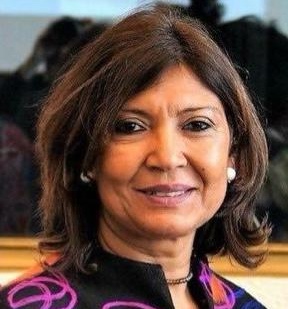
    Maria Helena Semedo, former FAO Deputy Director General (Climate and Natural Resources) between 2013 and 2024, is an economist and politician from Cape Verde. As leading expert in global development issues, she has worked in public service for over thirty years. She was FAO’s representative in Niger, then Deputy Regional Representative for Africa and Sub-regional Coordinator for West Africa. She also worked as an economist for the Cabo Verde Ministry of Planning and Cooperation, became Secretary of State for Fisheries, and then Minister for Fisheries, Agriculture and Rural Affairs – the first-ever woman Minister in her country. After serving as Minister for Tourism, Transportation and Marine Affairs from 1995-1998, she became Member of Parliament until 2003.