RusLab

The Russia Observatory (RUSLAB) is a dedicated research hub for the study of Russia, its domestic politics, historical trajectories, and international role, combining academic rigour with policy-relevant analysis and public-facing outputs. The research is situated within the broader debate on post-liberal contestation and the transformation of the international order.

RuLAB’s work aims to integrate close analysis of domestic governance, political economy, and social dynamics with a strong historical perspective rooted in Soviet and imperial legacies. It also examines how past institutional configurations, political cultures, and identity narratives continue to shape contemporary Russian politics and society.

Thematically, the Observatory covers four main interconnected areas:

  • Domestic politics and society — governance structures, center–periphery relations, regional identities, social stratification, ideological, religious and cultural evolutions, and the interaction between elites and the Russian society.
  • Russia–Europe relations — historical entanglements, energy interdependence, security architecture, and the reconfiguration of ties under war and sanctions.
  • The Eurasian space — relations with neighboring states, regional integration, and alignments involving China, Turkey, India, and other major Global South actors.
  • Global footprint — Russia’s political, economic, and security presence in Africa, the Middle East, and Russia’s role in reshaping the broader international order.
  • agullotta

  • Alfonso Giordano

    Alfonso Giordano is an associate professor of Economic and Political Geography at Niccolò Cusano University of Rome and an adjunct professor at LUISS University, where he teaches “Exogeography, Astropolitics, and Space Economy”. His research focuses on population geography, political demography, and human-environment interactions, with a particular emphasis on border studies. Recently, he has investigated the geographical, political and economic dimensions of space exploration, analysing its implications for governance, resource allocation, and territoriality beyond Earth.

  • Angelo Taraborelli

    Angelo Mario Taraborrelli

    Angelo “Mario” Taraborrelli has held strategic senior roles for over three decades in the national and international energy sector, significantly contributing to the definition of industrial and corporate policies in the oil & gas field and, more recently, in the electricity sector. With a strong background in international law and oil economics, he began his career at Eni in 1973, progressively taking on top positions, including that of CEO of the Refining & Marketing division, where he led a thorough strategic restructuring program and important international M&A operations. As Senior Vice President of Strategic Control, he directly influenced capital allocation decisions and key investments for the entire Eni group. Subsequently, he expanded his influence in the energy sector by joining the Board of Directors of Enel SpA, where for years he chaired the Internal Control and Risk Committee, contributing to the evolution of corporate governance in the context of the energy transition. Since 2015, he has been an Adjucnt Professor of Energy and Climate Policies at Luiss University, combining managerial expertise and academic vision in the global political-energy field.

  • Antonio Leandro

    Antonio Leandro

    Antonio Leandro (Law Degree, Bari; PhD, Rome-La Sapienza) is a Full Professor of International Law at the Department of Law of the Aldo Moro University of Bari, where he teaches public and private international law, international law of the sea, and international trade law. Expert for the European Commission and UNIDROIT, member of the Italian Foreign Policy and Security Laboratory at the CISS, he has been appointed as Scientific Advisor to the Italian Navy. He served as a director of a short-term master’s program on safety and security at sea in cooperation with the Italian Financial Police (Guardia di Finanza).

    Author of five monographs and several scientific papers, he is also editor or co-editor of six collective volumes. He serves on the editorial boards of several academic journals and co-directs an international law book series. His research interests range across private international law, public international law, and their intersections with European Union law.

    As regards maritime topics, he particularly focused – through scientific publications, workshops and lectures – on the Exclusive Economic Zone, maritime security, piracy, criminal jurisdiction at sea, migration by sea, maritime labour safety standards, naval peace-keeping, maritime spatial planning, underwater normative and regulatory framework, foreign direct investments in port and maritime environment, economic warfare in maritime activities, GHG emissions, and sustainable development in ocean governance.

  • crocca

  • Emiliana De Blasio

    Emiliana De Blasio

    Emiliana De Blasio  is Advisor to the Rector for Diversity, Inclusion and Sustainability and Professor of Sociology of Cultural and Communicative Processes at LUISS, where she teaches Sociology of Communication, Open government, Political participation and governance and Gender politics. She has been awarded research grants such as FIRB and PRIN and coordinated several research projects throughout her career.

    She has taught at Italian and foreign universities, including New York University, SciencesPo, Pontifical Gregorian University, University of Molise. She regularly teaches at LUISS Masters, Executive Masters and School of Journalism on topics related to inclusion, diversity and sustainability. She is also part of the Italian Open Government Forum and member of several scientific associations such as SISCC, AssoComPol, ECPR, ESA, SISP.

  • Francesca Corrao

    Francesca Maria Corrao

    Francesca Maria Corrao is Full Professor of Arabic Culture and Language in the Department of Political Science in LUISS University of Rome, director of MISLAM Program (Master in Economics and Institutions of Islamic Countries) of the School of Government at the same university. Previously she was Professor at the University of Naples “L’Orientale” (1996-2011), and visiting professor at the Alsun Faculty of the ‘Ayn Shams University in Cairo (2004), École Pratique des Hautes Études en Sciences Sociales (Paris 2007), at Fudan University (Shanghai 2017), Science Pò (Menton 2017/19). She held conferences and seminars at the Universities of Cairo, Beirut, Amman, Rabat, Tunis, Cambridge, Oxford and Harvard. The main focus of her scholarly activity is on Arabic Literature, Islamic Culture and History, Mediterranean Studies, Intercultural dialogue.  


    In “L’Orientale” University of Naples, Corrao was in charge of the Socrates European Projects: “Les Communautés Africaines en Europe” ( Paris 2000), Les Communautés Musulmanes en Europe” (Paris 2001). She is the “contact person” for the “Manifesto” for Inclusive University” (http://manifestouniversitainclusiva.unhcr.it/), Universities network for peace (RUniPace http://www.runipace.org/ ) and for the University Corridors for Refugees UNICORE 3.0 (http://universitycorridors.unhcr.it/ ); the latter is promoted by Italian universities with the support of UNHCR, in cooperation with the Italian Ministry of Foreign Affairs and other partners.  Corrao chairs the Scientific Committee of the Fondazione Orestiadi in Gibellina (Sicily); She is Overseas Research member of the Institute of Oriental Studies (Soka University, Tokyo); and is also Member of the European Union of Arabist and Islamist (UEAI), the Scientific Council of the Cortile dei Gentili (Pontifical Coucil for Culture, Vatican), International Affairs Institute IAI-Rome, the European Teachers of Modern Arabic Literature (EMTAR), Member of the Scientific committee of the Journals: Rivista Africa e Orienti, Semicerchio, ARABLIT, Journal of Arabic Literature, Dialoghi Mediterranei, open access e-journal of the Istituto Euro-Arabo.  


    Her most recent books include: Corrao F.M., Redaelli R., States, Actors and Geopolitical Drivers in the Mediterranean, Palgrave 2021; I cavalieri, le dame e i deserti. Storia della poesia araba (Istituto per l’Oriente, 2020); In guerra non mi cercate. Poesia araba delle rivoluzioni e oltre, with O. Capezio, E. Chiti e S. Sibilio (Le Monnier, 2018); L’Islam non è terrorismo, with L. Violante (Il Mulino, 2018); Islam, Religion and Politics (LUP, 2017); Islam, State and Modernity. Mohammed Abed Al-Jabri and the Future of the Arab World, with Z. Eyadat and M.Hashas (Palgrave, 2017); Le Rivoluzioni Arabe. La transizione Mediterranea, (Mondadori, 2011); Poeti Arabi di Sicilia (Mesogea, 2002); Giufà il furbo, lo sciocco, il saggio (Sellerio 2001, Nawādir Juhā, in Arabic 2020). 

  • Francesco Cherubini

    Francesco Cherubini is Associate Professor of EU Law at the Department of Political Science, Luiss “Guido Carli”, Rome. He is also the Director of the Luiss intensive course for the diplomatic career and the coordinator of the Luiss Master in Art Law. From 2022, he is UNCHR independent expert at the Rome Commission for asylum. Among his recent publications:Decisions under the Law of European Union: ‘You May Be Six People, but I Love You, inYEL, 2022, pp- 1-60. 

  • Gianfranco Pellegrino

    Gianfranco Pellegrino is an Associate Professor at LUISS Guido Carli Rome, where he teaches Political Philosophy. His interests are in the history of political thought (mainly Jeremy Bentham and Henry Sidgwick), distributive justice theories, migration, and environmental ethics. He wrote on global justice, the ethics of climate change and the Anthropocene. Among his publications: The Handbook of the Philosophy of Climate Change (edited with M. Di Paola), Springer, Switzerland, 2023, “Sidgwick and the Many Guises of the Good”, Philosophical Explorations, 2021; “Robust Responsibility for Climate Harms”, Ethical Theory and Moral Practice, 2018, “Climate Refugees: A Case for Protection”, in G. Pellegrino e M. Di Paola, eds, Canned Heat. Theoretical and Practical Challenges of Global Climate Change, London/Delhi: Routledge, 2014.

  • gnardacci

  • Ginevra Le Moli

    Ginevra Le Moli

    Ginevra Le Moli is part time Professor at the European University Institute (EUI), Florence, and a Fellow at the University of Cambridge, Cambridge Centre for Environment, Energy & Natural Resource Governance (C-EENRG), where she serves as the Managing Editor of the C-EENRG Research Series. She started her academic career as Assistant Professor of Public International Law at Leiden University, Grotius Centre for International Legal Studies in 2019. Ginevra is a general international lawyer with research interests both in foundational areas, including human rights and environmental law, as well as emerging fields, such as the governance of negative emission technologies (including geo-engineering) and global health security. She has published over 30 studies and she has co-authored several reports and studies commissioned by intergovernmental organizations. She has also an expanding portfolio of practice, including as a legal advisor and co-counsel in international proceedings before human rights bodies and the International Court of Justice. Ginevra holds a Ph.D. in Public International Law from the Graduate Institute of International Law and Development Studies (IHEID), Geneva. She also holds an LL.B. and a Masters in Law (cum laude) from the University of Roma Tre, an LL.M. in International Law from the Graduate Institute and a Diploma in International Law from the LSE (UK) and Advanced Certificate on the prevention of pandemics from the Harvard T.H. Chan School of Public Health/Harvard Medical School (US). She is a native Italian speaker, with fluency in English and French, and working knowledge of Spanish.

  • Giorgio Briozzo

    Giorgio Briozzo is a practising lawyer in international and maritime law, and teaching assistant in International Organisations and Human Rights and International Institutions and Global Governance at LUISS Guido Carli. He is also a member of the International Society for Military Law and the Law of War and of the Italian Maritime Law Association. Among his recent publications: The Establishment of the European Union Agency for Asylum, in Osorin (eds.), Working Paper 2-2022M; Il ruolo del comandante di nave in relazione ad ipotesi di soccorso in mare nel diritto nazionale ed internazionale, in DirMar, 2019, pp. 715-747. 

  • Giulia Ongari

    Giulia Ongari is a PhD candidate in Politics at Luiss Guido Carli. Her research focuses on the EU’s external action, particularly in defence and security cooperation with third countries. She holds a Master’s degree in International Relations with a specialisation in Diplomacy from Luiss, a Master’s in Global Ethics and Human Values from King’s College London, and a Bachelor’s Degree in International Relations, Journalism and Advertising from Bond University in Australia.

    Currently, she also serves as a research assistant at Luiss for the Horizon Europe projects REMIT, and as a teaching assistant for the course on the Integration of Europe.

    She previously served as a research assistant at Luiss for the Horizon Project RED-SPINEL and the Journal of European Integration, and as teaching assistant for the course in Asian Culture and Politics.

  • Giulia Tranchina

    Giulia Tranchina

    Giulia Tranchina is a Master’s student in Global Management and Politics, part of a Double Degree programme between LUISS University and Nova School of Business and Economics in Lisbon, where she cultivated a strong academic and professional interest in Africa and Latin America. Her research focuses on economic development strategies and regional cooperation in these regions. She previously interned at the Sahel and West Africa Club (SWAC) at OECD in Paris, where she contributed to analyses on regional dynamics and development policies. Through an internship at the Italian Embassy in Brazil, she gained experience in Latin American affairs, as she deepened her understanding of Brazil’s domestic and foreign policies. She is passionate about exploring how regional integration and investment can support sustainable development across emerging economies.

  • Giuliana Lampo

    Giuliana Lampo is a Postdoctoral Research Fellow at the Department of Law of the LUISS Guido Carli, where she is also Adjunct Professor of “International and EU Economic Law”. She obtained her PhD in International Law from the University of Naples Federico II in 2022, with a thesis on the topic of “Third-Party Funding in International Arbitration”. She has authored several works, published in Italian and international peer-reviewed journals and in collective works, with a particular focus on International Investment Law and Arbitration.

  • Giustino Luberti

    Giustino Luberti

    Graduate from the University of Oxford with a Master of Science in African Studies, Giustino Luberti is an expert in African politics and security. His research interests span from elections and political systems to defence, geopolitics and civil-military relations. His geographical focus is on Sub-Saharan Africa, with a detailed attention to Southern Africa and specifically Mozambique. His most recent work analysed the election strategies of opposition politicians in Mozambique, and he conducted his research with a period of fieldwork in Maputo. He is an aspiring scholar, eager to produce knowledge on the politics of the continent with an Afrocentric approach and methodological innovation.

  • Glauco Calzuola

    Glauco Calzuola is an international consultant and former EU Ambassador with extensive experience in international relations, development, and Europe-Africa relations. His career began as an infrastructure engineer before transitioning to roles within the European Commission. A significant portion of his work has been focused on fostering cooperation and development in Africa. He served as Head of Delegation in Rwanda from 1997 to 2000. Following this, he returned to HQ to lead negotiations with West African and Central African countries. His expertise led to his appointment as EU Ambassador in Angola in 2002, where he served until 2006, followed by a similar role in Mozambique from 2006 to 2011. These ambassadorships highlight his skills in diplomacy and managing international relations at a high level. From 2011 to 2015, he served at the General Directorate for International Cooperation and Development. His career reflects a deep commitment to international development and cooperation, particularly within the African context.

  • Grazia Covotta

  • Ibrahim Assane Mayaki

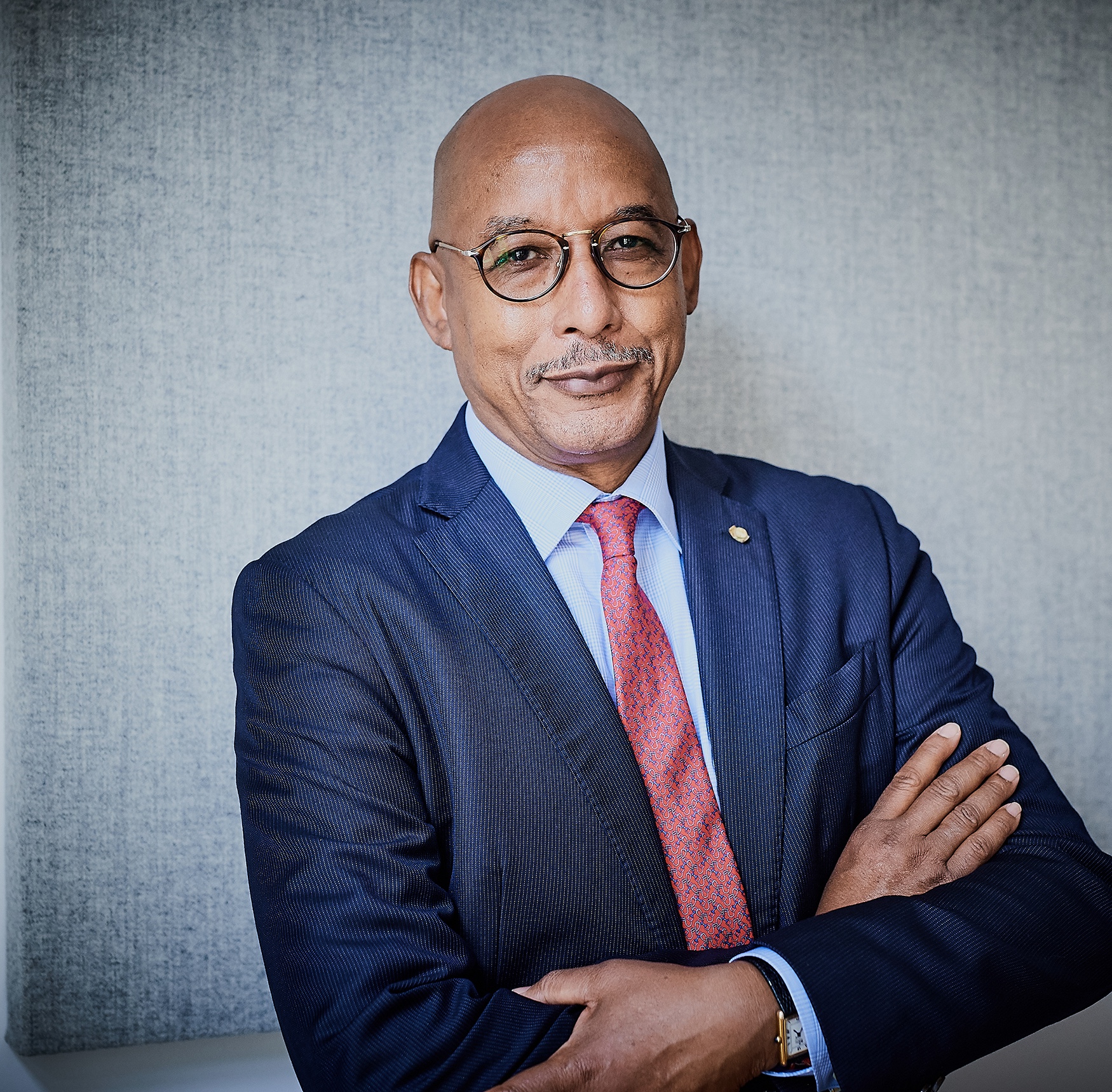
    Ibrahim Assane Mayaki

    Ibrahim Assane Mayaki, former Prime Minister and Foreign Minister of Niger. Previously he worked as senior manager of the uranium industry in Niger. He is a former Chief Executive Officer of the NPCA (New Partnership for Africa’s Development-NEPAD Planning and Coordinating Agency), which he transformed into the African Union Development Agency (AUDA-NEPAD) between 2009 and 2022, and he is former President of the OECD Sahel and West Africa Club (SWAC). He graduated from the Ecole Nationale d’Administration Publique of Quebec, Canada and holds a PhD in Administrative Sciences from the University of Paris I. Since 2022, he has been co-teaching the course on African Politics and Institutions at LUISS University in Rome. Since 2023, he has been the African Union Special Envoy for Food Systems.

  • Ilaria Cinelli

    Ilaria Cinelli

    Ilaria Cinelli is a senior engineer and leader in healthcare and space exploration with over a decade of experience. Her expertise includes space medicine, expeditions, and global health initiatives. She holds degrees in biomedical engineering and a doctorate in neural engineering. Ilaria is a fellow of the Aerospace Medical Association and co-chairs an educational curriculum on Space and Global Health with the United Nations Office for Outer Space Affairs and the World Health Organization. She is a prolific author, speaker, and recipient of numerous awards, shaping the future of space and healthcare.