RuLab

The Russia Observatory (RuLAB) is a dedicated research hub for the study of Russia, its domestic politics, historical trajectories, and international role, combining academic rigour with policy-relevant analysis and public-facing outputs. The research is situated within the broader debate on post-liberal contestation and the transformation of the international order.

RuLAB’s work aims to integrate close analysis of domestic governance, political economy, and social dynamics with a strong historical perspective rooted in Soviet and imperial legacies. It also examines how past institutional configurations, political cultures, and identity narratives continue to shape contemporary Russian politics and society.

Thematically, the Observatory covers four main interconnected areas:

  • Domestic politics and society — governance structures, center–periphery relations, regional identities, social stratification, ideological, religious and cultural evolutions, and the interaction between elites and the Russian society.
  • Russia–Europe relations — historical entanglements, energy interdependence, security architecture, and the reconfiguration of ties under war and sanctions.
  • The Eurasian space — relations with neighboring states, regional integration, and alignments involving China, Turkey, India, and other major Global South actors.
  • Global footprint — Russia’s political, economic, and security presence in Africa, the Middle East, and Russia’s role in reshaping the broader international order.
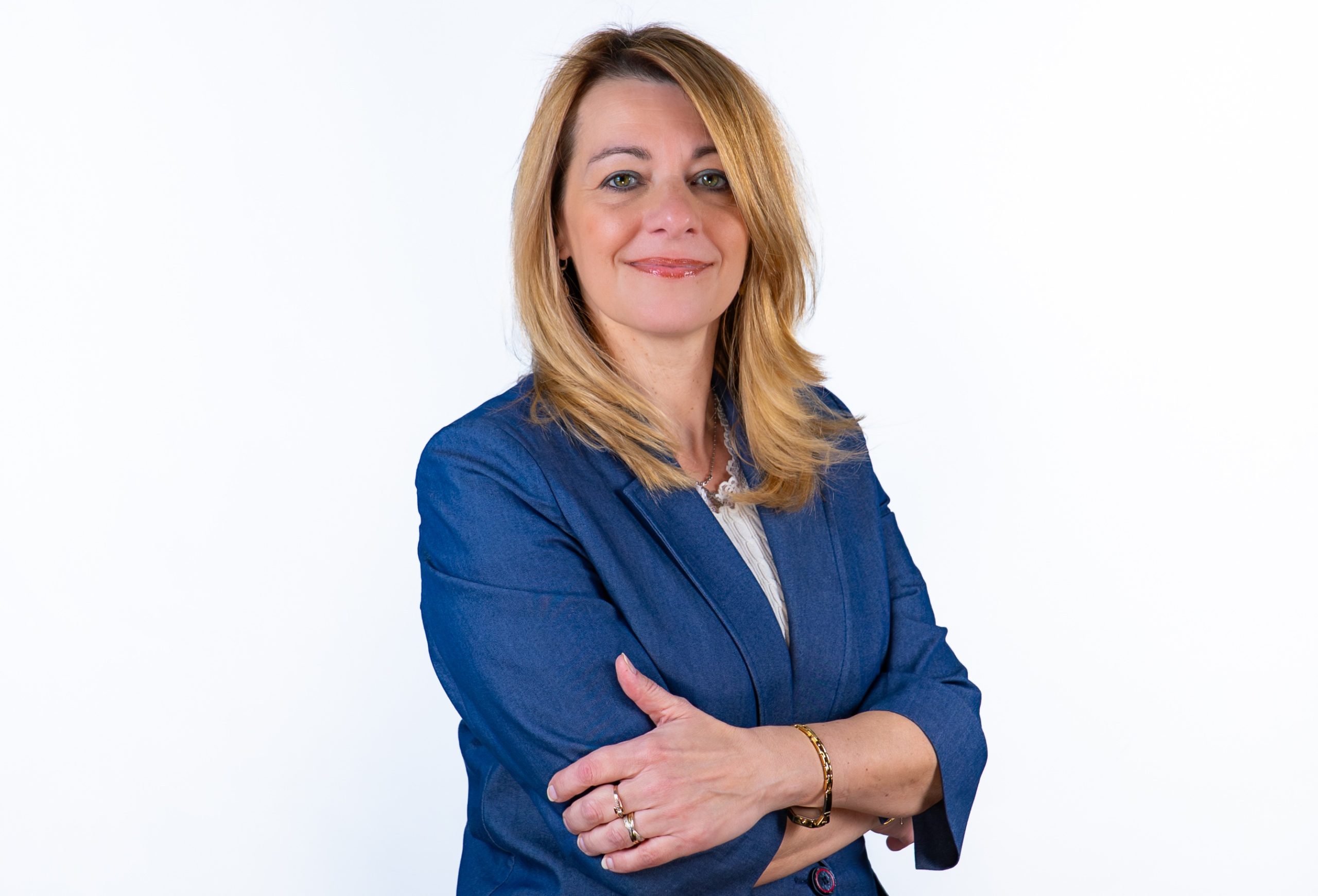
  • Marlène Agnès Laruelle

    Marlene Laruelle is a Full Professor of Political Science at Luiss Guido Carli University and previously served as Research Professor at The George Washington University’s Institute for European, Russian, and Eurasian Studies (IERES) from 2011 to 2025, where she held leadership roles as Associate Director and Director. She earned her Ph.D. in History from INALCO in Paris and a habilitation in Political Science from Sciences Po Paris. Laruelle leads the Illiberalism Studies Program, a transatlantic platform dedicated to research on illiberalism and postliberalism, and is a non-residential Senior Fellow at the Stimson Center. Throughout her career, she has held fellowships and visiting appointments at notable institutions such as the Institut für die Wissenschaften vom Menschen in Vienna, IFRI, the Carnegie Council, the Woodrow Wilson Center, and SAIS–Johns Hopkins University. She has authored or edited over twenty books with top academic presses, including recent monographs like Ideology and Meaning-Making under Putin Regime (2025) and Russia’s Arctic: A Changing Geopolitical and Environmental Context (2026), alongside numerous articles in leading scholarly and policy publications.

    Trained as a historian of ideas, Laruelle’s early work focused on post-Soviet Central Asia and Russia, examining nation-building processes, regional geopolitics, labor migration, and the intellectual underpinnings of Putin’s regime. Her research later expanded to the Russian Arctic, exploring how environmental change, infrastructure development, and territorial imaginaries influence political worldviews. More recently, she has turned to conceptual history and global comparative studies, analyzing the challenges facing liberalism and the emerging normative alternatives to the liberal international order. Her scholarship bridges academic rigor with policy relevance, offering insights into the evolving political and intellectual dynamics of Russia and the broader international system.

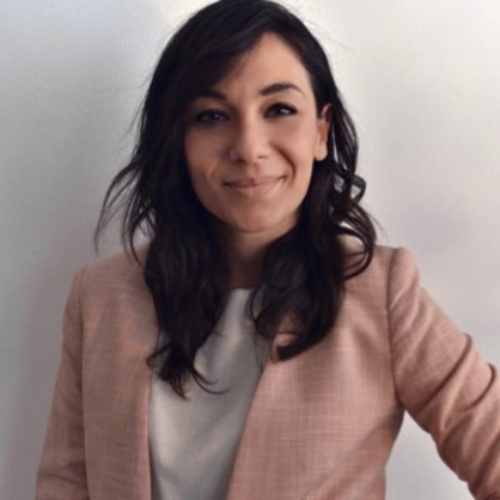
  • Flavia Lucenti

    Flavia Lucenti

    Flavia Lucenti is a postdoctoral researcher at LUISS University, Department of Political Science, for the EU Horizon Project REMIT.

    Her research interests include IR theory, China, Russia, technology and norms. At LUISS University, Flavia is also PhD tutor and teaching assistant while she is an adjunct professor at the American University of Rome. Previously, she worked as a research assistant at the University of Oxford for the EU Horizon Project EU3D and as a postdoctoral research fellow and adjunct professor at the University of Bologna. Flavia was also an adjunct professor at the University of Roma Tre and a senior teaching assistant in International Relations at the Ca’ Foscari University of Venice.

    She holds a PhD in Political Studies and International Relations from the University of Roma Tre. During her doctoral studies she was a visiting PhD student at the University of Hong Kong, the Moscow State Institute of International Relations and the European University Institute. From 2020 to 2023 she was a member of the Early Career Development Group of the European International Studies Association and in 2022 she was part of the annual cohort of the Next Generation Policy Expert Network, a program launched by Chatham House and the Korea Foundation. Currently, Flavia is a deputy editor for the annual Global Policy: Next Generation issue of the journal Global Policy from Durham University. She holds an MA (Summa cum Laude) in Diplomatic and International Affairs from the University of Bologna – Forlì Campus.

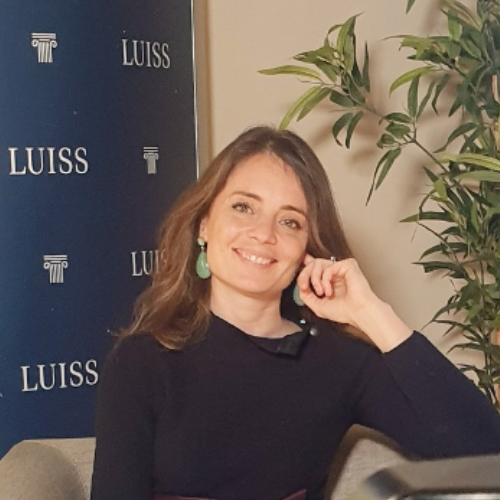
  • Carolina De Stefano

    Carolina De Stefano

    Carolina De Stefano is a Lecturer in European and Russian History at Luiss Guido Carli University and an associate member of the Centre d’Etudes des Mondes Russe, Caucasien & Centre-Européen (CERCEC-EHESS) in Paris.

    After graduating in International Relations from Luiss Guido Carli University, she earned her PhD from Scuola Superiore Sant’Anna in Pisa and the Higher School of Economics in Moscow and a post-doc from the Finnish Academy of Sciences, with a dissertation and research project focusing on the collapse of the USSR and the handling of post-Soviet ethnic conflicts.

    From 2014 until early 2022, she has conducted long-term archival research in Moscow and speaks Russian fluently. She has been a visiting researcher at several research institutions, including Harvard University, George Washington University, the Hoover Institution at Stanford, and the University of Warsaw,

    She is the author of Storia del Potere in Russia. Dagli Zar a Putin (Morcelliana, 2022) and has published several articles on late-Soviet and contemporary Russian history in international peer-reviewed academic journals such as Kritika (forthcoming, 2025), Russian History (2023), Cahiers du MondeRusse (2023), Russian Review (2022), the Journal of Eurasian Studies (2020). Her current book project aims to providethe first systematic historical account of the attempts made by experts and politicians under Mikhail Gorbachev and Boris Yeltsin to reform nationalities policies, handle ethnic conflicts, and give birth to a new Russia’s foreign policy towards its new neighbors in the years of the Soviet disintegration 1986-1994. This research aims to retrace some of the historical and political roots of today’s Russia’s war in Ukraine.

    Since 2016, she has collaborated as a Russia expert with Oxford Analytica, as well as written analyses on Russian politics, foreign policy, and Russia-Ukraine relations for national newspapers (Il Sole 24 OreCorriere della SeraDomani, and The Huffington Post).