
Home > Research Unit > Publications
Head of Unit
-
agullotta
-
Alfonso Giordano
Alfonso Giordano is an associate professor of Economic and Political Geography at Niccolò Cusano University of Rome and an adjunct professor at LUISS University, where he teaches “Exogeography, Astropolitics, and Space Economy”. His research focuses on population geography, political demography, and human-environment interactions, with a particular emphasis on border studies. Recently, he has investigated the geographical, political and economic dimensions of space exploration, analysing its implications for governance, resource allocation, and territoriality beyond Earth.
-
Angelo Mario Taraborrelli
Angelo “Mario” Taraborrelli has held strategic senior roles for over three decades in the national and international energy sector, significantly contributing to the definition of industrial and corporate policies in the oil & gas field and, more recently, in the electricity sector. With a strong background in international law and oil economics, he began his career at Eni in 1973, progressively taking on top positions, including that of CEO of the Refining & Marketing division, where he led a thorough strategic restructuring program and important international M&A operations. As Senior Vice President of Strategic Control, he directly influenced capital allocation decisions and key investments for the entire Eni group. Subsequently, he expanded his influence in the energy sector by joining the Board of Directors of Enel SpA, where for years he chaired the Internal Control and Risk Committee, contributing to the evolution of corporate governance in the context of the energy transition. Since 2015, he has been an Adjucnt Professor of Energy and Climate Policies at Luiss University, combining managerial expertise and academic vision in the global political-energy field.
-
Antonio Leandro
Antonio Leandro (Law Degree, Bari; PhD, Rome-La Sapienza) is a Full Professor of International Law at the Department of Law of the Aldo Moro University of Bari, where he teaches public and private international law, international law of the sea, and international trade law. Expert for the European Commission and UNIDROIT, member of the Italian Foreign Policy and Security Laboratory at the CISS, he has been appointed as Scientific Advisor to the Italian Navy. He served as a director of a short-term master’s program on safety and security at sea in cooperation with the Italian Financial Police (Guardia di Finanza).
Author of five monographs and several scientific papers, he is also editor or co-editor of six collective volumes. He serves on the editorial boards of several academic journals and co-directs an international law book series. His research interests range across private international law, public international law, and their intersections with European Union law.
As regards maritime topics, he particularly focused – through scientific publications, workshops and lectures – on the Exclusive Economic Zone, maritime security, piracy, criminal jurisdiction at sea, migration by sea, maritime labour safety standards, naval peace-keeping, maritime spatial planning, underwater normative and regulatory framework, foreign direct investments in port and maritime environment, economic warfare in maritime activities, GHG emissions, and sustainable development in ocean governance.
-
crocca
-
Emiliana De Blasio
Emiliana De Blasio is Advisor to the Rector for Diversity, Inclusion and Sustainability and Professor of Sociology of Cultural and Communicative Processes at LUISS, where she teaches Sociology of Communication, Open government, Political participation and governance and Gender politics. She has been awarded research grants such as FIRB and PRIN and coordinated several research projects throughout her career.
She has taught at Italian and foreign universities, including New York University, SciencesPo, Pontifical Gregorian University, University of Molise. She regularly teaches at LUISS Masters, Executive Masters and School of Journalism on topics related to inclusion, diversity and sustainability. She is also part of the Italian Open Government Forum and member of several scientific associations such as SISCC, AssoComPol, ECPR, ESA, SISP.
-
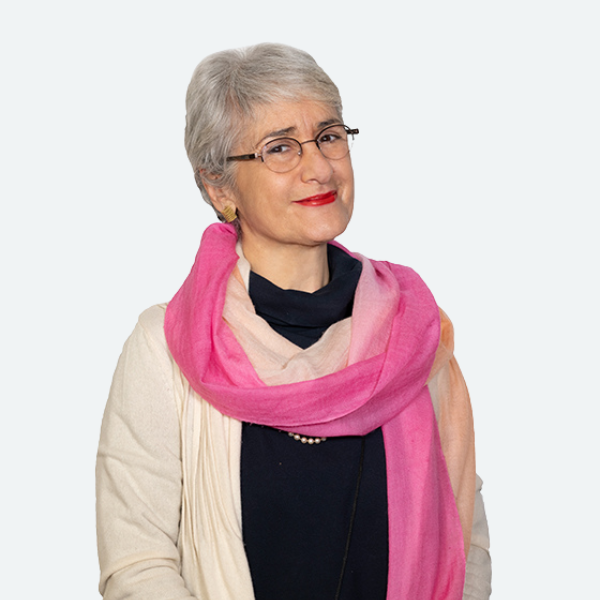
Francesca Maria Corrao
Francesca Maria Corrao is Full Professor of Arabic Culture and Language in the Department of Political Science in LUISS University of Rome, director of MISLAM Program (Master in Economics and Institutions of Islamic Countries) of the School of Government at the same university. Previously she was Professor at the University of Naples “L’Orientale” (1996-2011), and visiting professor at the Alsun Faculty of the ‘Ayn Shams University in Cairo (2004), École Pratique des Hautes Études en Sciences Sociales (Paris 2007), at Fudan University (Shanghai 2017), Science Pò (Menton 2017/19). She held conferences and seminars at the Universities of Cairo, Beirut, Amman, Rabat, Tunis, Cambridge, Oxford and Harvard. The main focus of her scholarly activity is on Arabic Literature, Islamic Culture and History, Mediterranean Studies, Intercultural dialogue.
In “L’Orientale” University of Naples, Corrao was in charge of the Socrates European Projects: “Les Communautés Africaines en Europe” ( Paris 2000), Les Communautés Musulmanes en Europe” (Paris 2001). She is the “contact person” for the “Manifesto” for Inclusive University” (http://manifestouniversitainclusiva.unhcr.it/), Universities network for peace (RUniPace http://www.runipace.org/ ) and for the University Corridors for Refugees UNICORE 3.0 (http://universitycorridors.unhcr.it/ ); the latter is promoted by Italian universities with the support of UNHCR, in cooperation with the Italian Ministry of Foreign Affairs and other partners. Corrao chairs the Scientific Committee of the Fondazione Orestiadi in Gibellina (Sicily); She is Overseas Research member of the Institute of Oriental Studies (Soka University, Tokyo); and is also Member of the European Union of Arabist and Islamist (UEAI), the Scientific Council of the Cortile dei Gentili (Pontifical Coucil for Culture, Vatican), International Affairs Institute IAI-Rome, the European Teachers of Modern Arabic Literature (EMTAR), Member of the Scientific committee of the Journals: Rivista Africa e Orienti, Semicerchio, ARABLIT, Journal of Arabic Literature, Dialoghi Mediterranei, open access e-journal of the Istituto Euro-Arabo.
Her most recent books include: Corrao F.M., Redaelli R., States, Actors and Geopolitical Drivers in the Mediterranean, Palgrave 2021; I cavalieri, le dame e i deserti. Storia della poesia araba (Istituto per l’Oriente, 2020); In guerra non mi cercate. Poesia araba delle rivoluzioni e oltre, with O. Capezio, E. Chiti e S. Sibilio (Le Monnier, 2018); L’Islam non è terrorismo, with L. Violante (Il Mulino, 2018); Islam, Religion and Politics (LUP, 2017); Islam, State and Modernity. Mohammed Abed Al-Jabri and the Future of the Arab World, with Z. Eyadat and M.Hashas (Palgrave, 2017); Le Rivoluzioni Arabe. La transizione Mediterranea, (Mondadori, 2011); Poeti Arabi di Sicilia (Mesogea, 2002); Giufà il furbo, lo sciocco, il saggio (Sellerio 2001, Nawādir Juhā, in Arabic 2020).
-
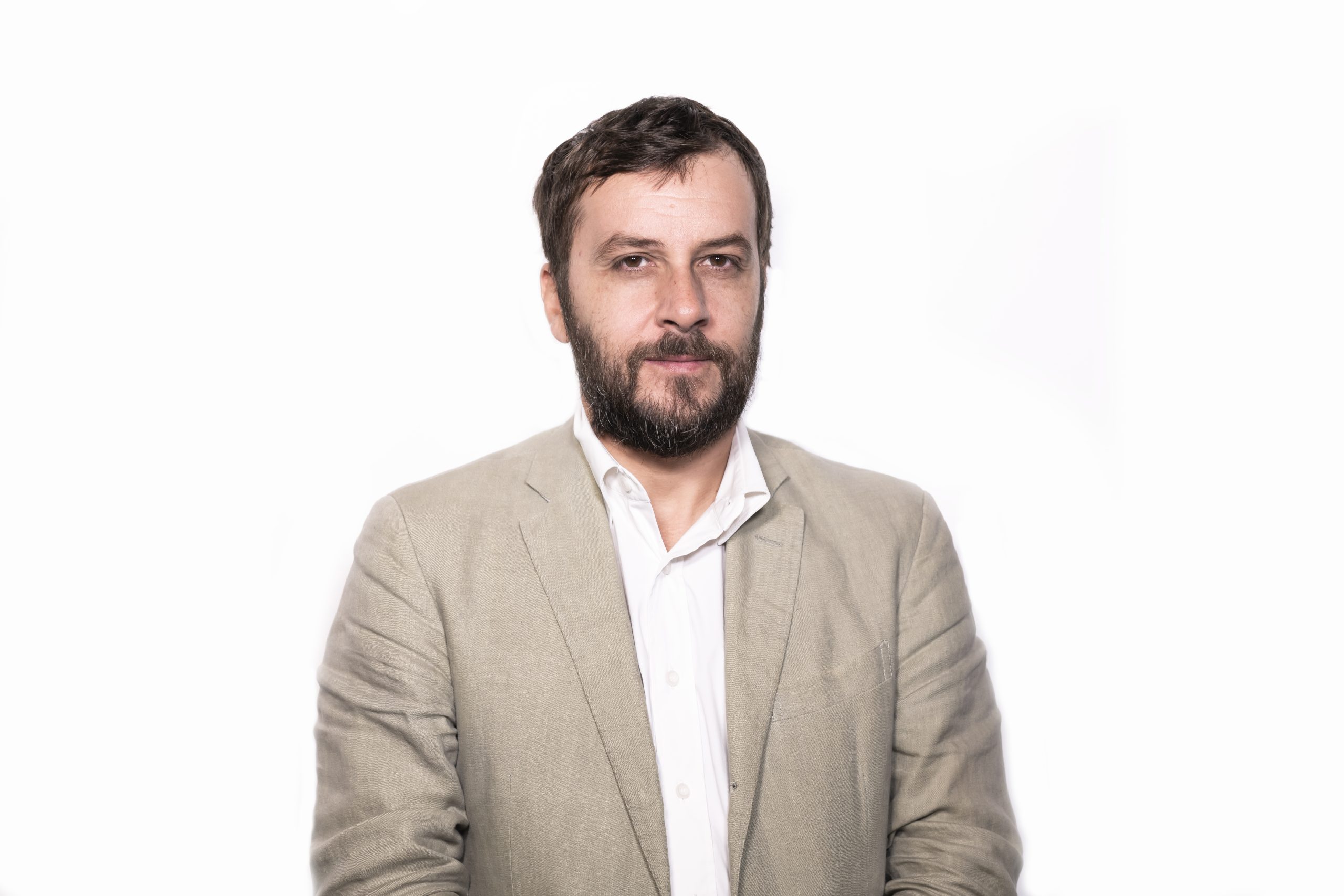
Francesco Cherubini
Francesco Cherubini is Associate Professor of EU Law at the Department of Political Science, Luiss “Guido Carli”, Rome. He is also the Director of the Luiss intensive course for the diplomatic career and the coordinator of the Luiss Master in Art Law. From 2022, he is UNCHR independent expert at the Rome Commission for asylum. Among his recent publications: Decisions under the Law of European Union: ‘You May Be Six People, but I Love You’, in YEL, 2022, pp- 1-60.
-
Gianfranco Pellegrino
Gianfranco Pellegrino is an Associate Professor at LUISS Guido Carli Rome, where he teaches Political Philosophy. His interests are in the history of political thought (mainly Jeremy Bentham and Henry Sidgwick), distributive justice theories, migration, and environmental ethics. He wrote on global justice, the ethics of climate change and the Anthropocene. Among his publications: The Handbook of the Philosophy of Climate Change (edited with M. Di Paola), Springer, Switzerland, 2023, “Sidgwick and the Many Guises of the Good”, Philosophical Explorations, 2021; “Robust Responsibility for Climate Harms”, Ethical Theory and Moral Practice, 2018, “Climate Refugees: A Case for Protection”, in G. Pellegrino e M. Di Paola, eds, Canned Heat. Theoretical and Practical Challenges of Global Climate Change, London/Delhi: Routledge, 2014.
-
gnardacci
Researcher
-
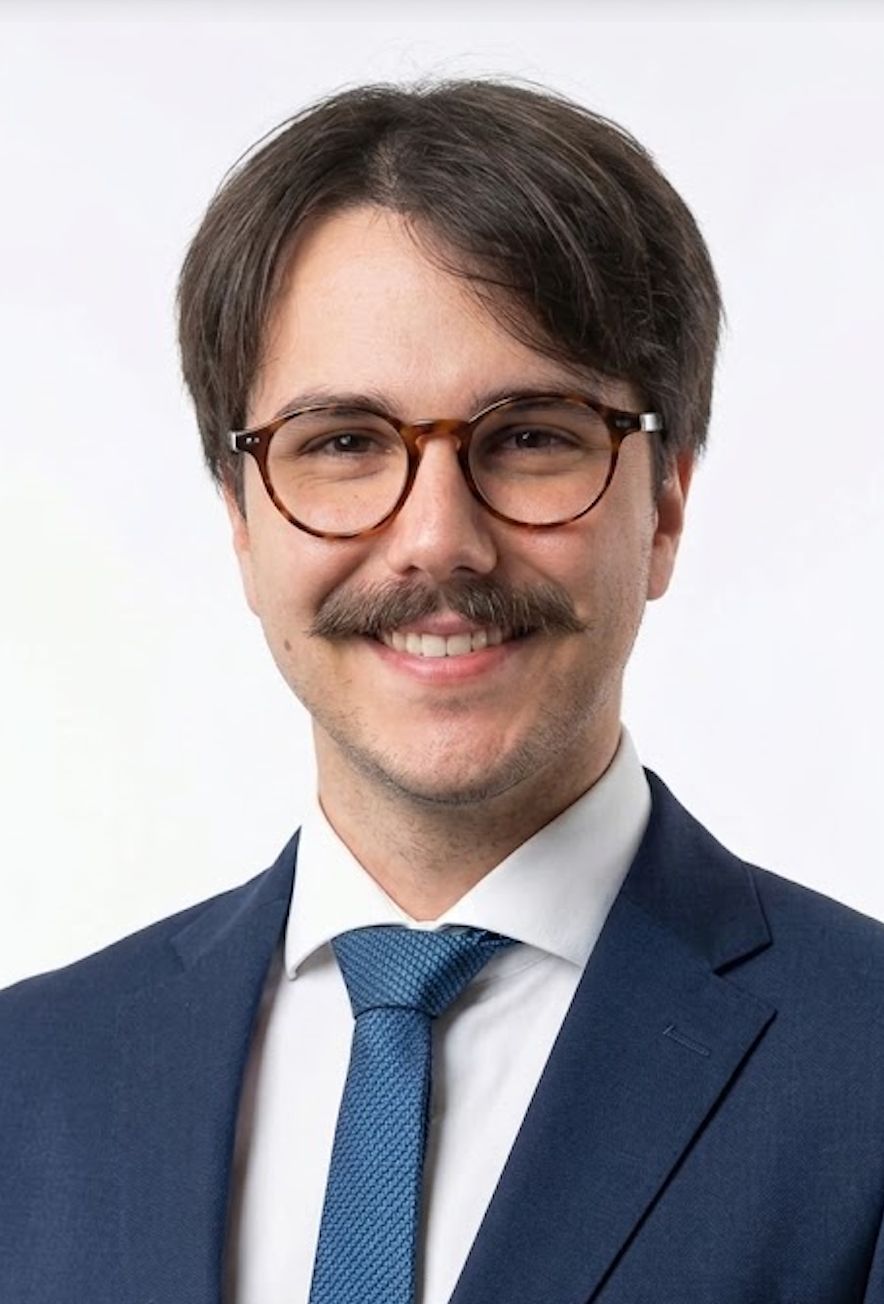
Emanuele Chizzoni
Emanuele Chizzoni holds an Erasmus Mundus International Master in Security, Intelligence and Strategic Studies. He has previously contributed to wargaming initiatives for Italian defense institutions and conducted research at the George C. Marshall European Center for Security Studies. Following his professional experience in the cybersecurity consulting sector, his interests have turned towards emerging technologies, economic warfare, and strategic wargaming.
-
Emanuele Vincent
-
Emidio Diodato
Emidio Diodato is Professor of Political Science at the University for Foreigners of Perugia. He has held teaching and research positions at several international institutions, including the University of Damascus, Boğaziçi University (Istanbul), Universidad Nacional de Cuyo (Mendoza), Odessa Law Academy, BTU Cottbus, Yaşar University (Izmir), and the University of Rhode Island. His research, which examines foreign policy and geopolitics from both theoretical and comparative perspectives, has been published in leading international journals such as Contemporary Politics, The International Spectator, Journal of Common Market Studies, and Contemporary Italian Politics. He is the author or co-author of more than seventy scholarly publications, including numerous essays and books. Among his works on Italian foreign policy, two volumes published by Palgrave stand out: Italy in International Relations: The Foreign Policy Conundrum (2017) and Berlusconi “The Diplomat”: Populism and Foreign Policy in Italy (2019). On the same subject, he published the Handbook of Italian Foreign Policy (in Italian, Il Mulino). He has also served as the scientific coordinator of three research projects funded by the European Union.
-

Emma Bellon
Emma Bellon holds a Double Master’s Degree in International Affairs from LUISS Guido Carli University and Sciences Po Bordeaux, where she graduated with a thesis on demographic transition in India and its socio-economic impact, tracing pathways to securitisation in national policy and discourse from 1980 to 2025.
Her research interests focus on India and Southeast Asia, combining demographic and social challenges with critical security studies and the region’s evolving geopolitical dynamics. She has gained professional experience at the Italian Embassy in Bangkok, the Indian Chamber of Commerce in Italy, and CeSI – Centro Studi Internazionali, where she published analyses on the Asia-Pacific. She has a basic knowledge of Hindi.
-
Ersilia Francesca
Ersilia Francesca is Full Professor of History of Islamic countries at Università “L’Orientale” in Naples – Asia Africa and Mediterranean Department, where she teaches “Contemporary history of Economy of Middle East and North Africa” and “Gender Politics in Islamic Context”. She is chief editor of the peer-reviewed journal Studi Magrebini (Brill), and former director of the Center for Islamic World at L’Orientale. She is president of the University “L’Orientale” Quality Assurance Board. She is also chief editor of the series Studies in Ibadism and Oman, Olms (Germany).
Her scholarly activity focuses on Islamic law, gender studies in the MENA region, and history of Islamic economics. She published 5 books and 3 edited books; and wrote over 20 articles in PR journals and contributions in edited books in the last 10 years. Her 2002 book titled Teoria e pratica del commercio nell’islam medievale is considered a milestone in the field of studies on Ibadism and early Islam (s. review in JSAI 2004/29). Her bookEconomia, religione e morale nell’islam (Carocci 2013) is the first attempt of a comprehensive reconstruction of the Islamic economic thinking in Italian. In the last five years she has supervised over 50 Master thesis, 6 PhD projects, 1 joint-supervision (cotutelle) with EPHE, Paris, and one Postdoctoral fellow.
Among her recent publications: Economia, religione e morale nell’islam, Carocci, Roma 2013; “Gender and Economics in Mediterranean: Looking for New Opportunities for North African Women”, in States, Actors and Geopolitical Drivers in the Mediterranean, Palgrave 2021; “Economia islamica: significati e prospettive”, in L’islam non è terrorismo, Il Mulino, 2018; “Denaro e valori: la business ethics dal punto di vista islamico”, in Divus Thomas, 119/2016; “Economic Opportunities and Social Challenges in the North African Transition”, in Emerging Actors in Post- Revolutionary North Africa, 2017. She is editor of the book: Ibadi Theology. Rereading Sources and Scholarly Works, G. OLMS, Hildesheim-Zürich-New York 2015 and co-editor with A.M. Di Tolla of La rivoluzione ai tempi di Internet. Il futuro della democrazia nel Maghreb e nel mondo arabo, Naples 2012, and of Emerging Actors in Post- Revolutionary North Africa, 2 vols., Naples 2017.
-
Fabio Caffio
Fabio Caffio, graduated with full marks in Law at the La Sapienza University of Rome, served in the legal branch of the Italian Navy until 2011, when he retired with the rank of Rear Admiral. He later collaborated with the Italian Ministry of Foreign Affairs and International Cooperation and served as a Naval advisor. An expert in the law of the sea, he has participated in numerous meetings concerning maritime delimitation, as well as international instruments such as the SUA and SAR Conventions. He was a member of the Group of experts convened in 1994 to draft the San Remo Manual on International Law applicable to Armed Conflicts at Sea and is a member of the International Society for Military Law and the Law of War.
He regularly contributes to leading legal journals and is the author of Glossario del Diritto del Mare. He has also served as Adjunct Professor of Geopolitics and the Law of the Sea at Aldo Moro University of Bari.
-

Federico Brogi Carraroli
Federico Brogi Carraroli is a PhD candidate in Energy Policy at Luiss Guido Carli University and Doctoral Fellow for the Enel Foundation. Federico holds an Italian second level advanced degree in Politics and International Relations, a Master’s in Global Management and Politics, and a Bachelor’s in Politics: Philosophy and Economics. He has previously worked at the Ministry for Enterprise and Made in Italy, at the Confindustria association FederUnacoma, and as “Fausto de Franceschi” Fellow for the Italian trade Agency.
-
Fiamma Concarella
Fiamma Concarella is a PhD Candidate at the Department of Law of LUISS Guido Carli University, where she is also assistant professor of “International law and Artificial intelligence” and “International Organizations and Human Rights”. She is also Tutor of International Law for the Faculty Political Science and Law. She is part of the LUISS Team of Research for the EU-funded REMIT project.
-
Flavia Lucenti
Flavia Lucenti is a postdoctoral researcher at LUISS University, Department of Political Science, for the EU Horizon Project REMIT.
Her research interests include IR theory, China, Russia, technology and norms. At LUISS University, Flavia is also PhD tutor and teaching assistant while she is an adjunct professor at the American University of Rome. Previously, she worked as a research assistant at the University of Oxford for the EU Horizon Project EU3D and as a postdoctoral research fellow and adjunct professor at the University of Bologna. Flavia was also an adjunct professor at the University of Roma Tre and a senior teaching assistant in International Relations at the Ca’ Foscari University of Venice.
She holds a PhD in Political Studies and International Relations from the University of Roma Tre. During her doctoral studies she was a visiting PhD student at the University of Hong Kong, the Moscow State Institute of International Relations and the European University Institute. From 2020 to 2023 she was a member of the Early Career Development Group of the European International Studies Association and in 2022 she was part of the annual cohort of the Next Generation Policy Expert Network, a program launched by Chatham House and the Korea Foundation. Currently, Flavia is a deputy editor for the annual Global Policy: Next Generation issue of the journal Global Policy from Durham University. She holds an MA (Summa cum Laude) in Diplomatic and International Affairs from the University of Bologna – Forlì Campus.
-
Francesco Lapenta
Francesco Lapenta is the founding director of the Institute of Future and Innovation Studies at John Cabot University in Rome. Since 2018, he has led the Institute in fostering interdisciplinary dialogue to develop governance frameworks for ethical and sustainable technological innovation. His research focuses on AI, data ethics, digital governance, and the socio-political implications of space exploration. Previously, he was an associate professor at RUC University, a visiting professor at NYU, a Mozilla Fellow, and technical editor of IEEE’s Global AI Ethics Initiative.