ItaFS

The Italian Foreign Policy and Security Laboratory (ItaFS) research unit at the Center for International Strategic Studies at Luiss Guido Carli, dedicates itself to understanding and advancing Italian national interest in a complex global environment. This specialized unit emphasizes strategic foresight by researching on the latest global trends and by providing scenario and political risk analyses for various stakeholders both governmental and non-governmental.

Comprised of a blend of senior and junior researchers, each with diverse institutional affiliations, the ISFD team offers a broad yet in-depth understanding of global politics. Their expertise spans from security issues and the evolving impact of technological advancements on international relations to diplomatic studies and foreign policy analysis. This multidisciplinary approach enables the unit to foresee and interpret the dynamic interplay between current national and international issues and geopolitical shifts, a crucial factor for promoting a better-informed Italy’s foreign policy.

The unit aims to gather information and insights on the impact of the so-called emerging and disruptive technologies, including military drones, artificial intelligence, semiconductors, cloud computing, robotics, and autonomous systems, as well as on trends in military innovation and the defense market. The unit analyses the potential impact of these technologies and trends on the military and security sectors, including their effects at the strategic, operational, and tactical level, as well as their general implications in great power competition.

A focal point of the ItaSecLAB is also its work is hybrid diplomacy, a conceptualization of the diplomatic effort that sees the systematic engagement of various stakeholders besides the governmental bodies in drafting and acting in Foreign Policy. By actively engaging with the government at the national and local levels and with actors from the private the third sector, the unit studies and develops alternative strategies to the government-to-government diplomacy. Besides the analytical part, the Unit regularly organizes events to facilitate the communication and the synergy among these foreign policy actors.
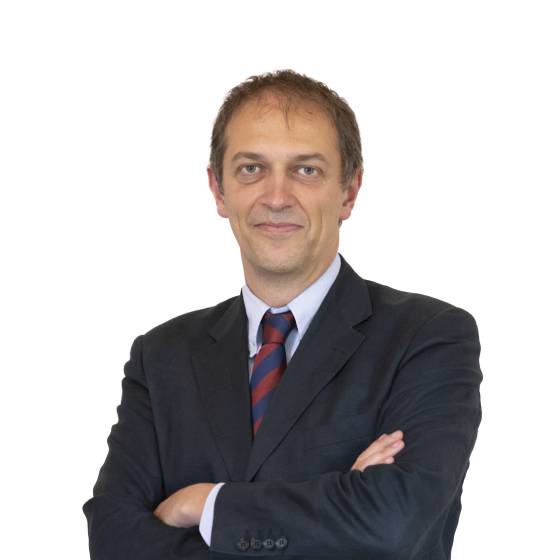
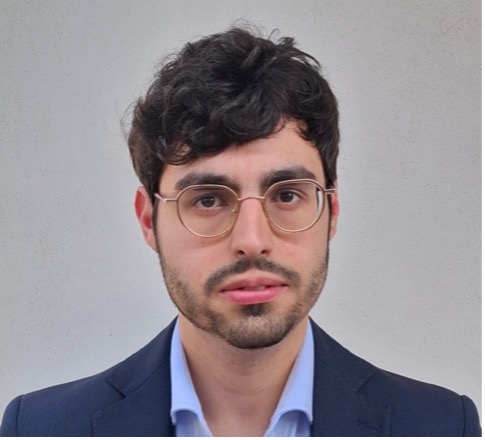
  • Raffaele Marchetti

    Raffaele Marchetti (Laurea, Rome-La Sapienza; PhD, London-LSE) is Deputy Rector for Internationalization and Professor in International Relations at the Department of Political Science and the School of Government of LUISS. His research interest concerns global politics and governance, hybrid and city diplomacy, transnational civil society, (cyber-)security and political risk, and democracy.

    He acts as external expert for the European Commission and other public/private institutions on issues of global governance, public policies, civil society, and security. He is ISA’s United Nations-NGO Representative (2022-2024). He is also member of the editorial board of The International Spectator, the Academic Advisory Board of the Finnish Institute of International Affairs (FIIA), LabGov – the LABoratory for the GOVernance of the City as a Commons,  International Institute for Social and Economic Studies (IISES). He is the editor of the Routledge series Innovations in International Affairs and the Luiss University Press series Radar.

  • Gianluca ansalone

    Gianluca Ansalone

    Gianluca Ansalone currently serves as Head of Public Affairs & Sustainability at Novartis Italia. He is a lecturer in Geopolitics, Strategy, and Public Affairs at the University of Rome – Tor Vergata, Campus Biomedico di Roma, and Luiss – Guido Carli. He has held institutional positions at the Presidency of the Republic, the Senate of the Republic, and the Presidency of the Council of Ministers. His latest publication is “Geopolitics of Contagion – The Future of Democracies and the New World Order after Covid-19” (Rubbettino, foreword by Gianni Letta).

  • Claudio Christopher Passalacqua

    Claudio Christopher Passalacqua is currently a teaching assistant in international relations at Luiss Guido Carli. He earned a Ph.D. in international studies from the University of Trento, with a focus on power shifts in standard settings. His research interests include Foreign Policy Analysis, EU-China relations, and the competition between great powers over digital connectivity plans. Claudio holds a Bachelor of Arts in International Affairs from John Cabot University, as well as a Double-Master Degree in International Relations from LUISS Guido Carli and China Foreign Affairs University. In addition, he worked as a lecturer and teaching assistant at the University of Trento, as a Schuman trainee at the European Parliament, and as an intern at the Italian Trade Agency in Beijing.

  • Daniela Irrera

    Daniela Irrera

    Daniela Irrera is Professor of Political Science and International Relations at the School of Advanced Defence Studies, CASD, Rome. She is also Visiting Professor of Political Violence and Terrorism and Civil Society and Sustainability at the OSCE Academy in Bishkek, Kyrgyzstan. She currently serves as Chair of the ECPR, associate editor of the Journal of Contemporary European Studies, co-editor of the Springer book series on Non-State Actors in International Relations, together with Marianna Charountaki. She is a member of the EU Research Committee of the Knowledge Hub on Prevention of Radicalization and is consultant for the UN Working Group on the use of mercenaries.

  • Adriana Lori

    Adriana Lori is a diplomat currently serving at the Permanent Mission of Italy to the OSCE. Her previous roles include Consul at the Italian Consulate General in Chongqing, China, and head of the Partnerships section within the NATO Office at the Italian Ministry of Foreign Affairs and International Cooperation. Her research centers on the impact of technology and artificial intelligence on international security and foreign policy.

    Fluent in English, Chinese, and Spanish, with working proficiency in French and basic Russian, she holds a Double Master’s Degree in International Relations from LUISS Guido Carli and China Foreign Affairs University. She also completed postgraduate courses at Harvard Kennedy School, focusing on security and emerging technologies.

    In her free time, she enjoys kickboxing, running, and immersing herself in French and Russian literature.

  • Andrea Gilli

    Andrea Gilli is a Senior Researcher at the NATO Defense College, Rome. He received his PhD in Social and Political Science from the European University Institute in 2014. His research interests focus on issues related to technological change and military innovation. His Twitter account is @aa_gilli.

  • Antonio Calcara

    Antonio Calcara

    Antonio Calcara is a Post-Doctoral Researcher at the University of Antwerp in Belgium. He received his PhD in Political Science from the LUISS Guido Carli University in 2015. His research interests are in the fields of European security and defence-industrial issues. His twitter account is @AntonioCalcara.

  • Arlo Poletti

    Arlo Poletti

    Arlo Poletti is Professor of International Relations at the Department of Sociology and Social Research of the University of Trento. He holds a PhD from the University of Bologna, previously held a postdoctoral position at the University of Antwerp (2009–2013), and served as Assistant Professor at LUISS Guido Carli (2013–2016) and at the University of Bologna (2016).

    His roles at Trento include coordinating the BA in International Studies and serving on the Board of the Doctorate of Research in International Studies at the School of International Studies. He also acts as an expert evaluator for national and international research funding bodies.

    His research lies in International Political Economy, focusing on the political economy of globalization, including the politics of trade and investment, transnational advocacy at global and EU levels, and international regulatory cooperation. Recent work examines how globalization-induced economic distress shapes individual preferences and political behavior.

    He is the author of five monographs, with research published in International Organization, Regulation & Governance, Journal of Common Market Studies, Journal of European Public Policy, Review of International Studies, European Political Science Review, and Review of International Organizations.

  • Carolina De Stefano

    Carolina De Stefano

    Carolina De Stefano is a Lecturer in European and Russian History at Luiss Guido Carli University and an associate member of the Centre d’Etudes des Mondes Russe, Caucasien & Centre-Européen (CERCEC-EHESS) in Paris.

    After graduating in International Relations from Luiss Guido Carli University, she earned her PhD from Scuola Superiore Sant’Anna in Pisa and the Higher School of Economics in Moscow and a post-doc from the Finnish Academy of Sciences, with a dissertation and research project focusing on the collapse of the USSR and the handling of post-Soviet ethnic conflicts.

    From 2014 until early 2022, she has conducted long-term archival research in Moscow and speaks Russian fluently. She has been a visiting researcher at several research institutions, including Harvard University, George Washington University, the Hoover Institution at Stanford, and the University of Warsaw,

    She is the author of Storia del Potere in Russia. Dagli Zar a Putin (Morcelliana, 2022) and has published several articles on late-Soviet and contemporary Russian history in international peer-reviewed academic journals such as Kritika (forthcoming, 2025), Russian History (2023), Cahiers du MondeRusse (2023), Russian Review (2022), the Journal of Eurasian Studies (2020). Her current book project aims to providethe first systematic historical account of the attempts made by experts and politicians under Mikhail Gorbachev and Boris Yeltsin to reform nationalities policies, handle ethnic conflicts, and give birth to a new Russia’s foreign policy towards its new neighbors in the years of the Soviet disintegration 1986-1994. This research aims to retrace some of the historical and political roots of today’s Russia’s war in Ukraine.

    Since 2016, she has collaborated as a Russia expert with Oxford Analytica, as well as written analyses on Russian politics, foreign policy, and Russia-Ukraine relations for national newspapers (Il Sole 24 OreCorriere della SeraDomani, and The Huffington Post).

  • Carolina Polito

    Carolina Polito

    Carolina Polito is a PhD Candidate at LUISS Guido Carli University, where she deals with the geopolitics of surveillance technologies, in particular the export of biometric technologies to developing countries. She is also an associate researcher at the Center for European Policy Studies (Brussels) where she works on Tender-based projects for the evaluations of European policies on cybersecurity. She was an associate researcher at the International Affairs Institute (IAI) where she also worked on digital-related issues such as the proliferation of cyber weapons.