AsiaLAB

The Asian Laboratory (AsiaLAB) Research Unit of the Center for International and Strategic Studies (CISS) at LUISS Guido Carli University is a research observatory focused on the study about political, social, economic and cultural developments in Asian societies, bilateral relations of East Asian states with one another, trilateral and regional arrangements in Asia, the Asian region in the context of the changing geo-political landscape globally, as well as relations between East Asia and Europe, and with Italy in particular. One particular focus of the observatory is on the connectivity agenda between East Asia and Europe, taking into account important developments such as the Belt and Road Initiative, the EU Connectivity Strategy, the Free and Open Indo-Pacific, Transatlantic Relations in the age of Global China and other such initiatives. These developments, occurring in the context of a wider global realignment challenging multilateral institutions and global governance, make it important to study the sustainability of connections between Europe and Asia. The work of the Asian Laboratory is dedicated to expanding understanding of international affairs and it aims to contribute to debates about the strategic, economic, societal and culture value of Euro-Asia connectivity, about the sustainability of related policies and infrastructures, and about the governance arrangements of related institutions. The research unit collaborates with various governments and embassies, foundations and academic institutions, to share knowledge and insights and to develop new approaches and strategic analysis to address emerging challenges and opportunities with regards to the Asian region.

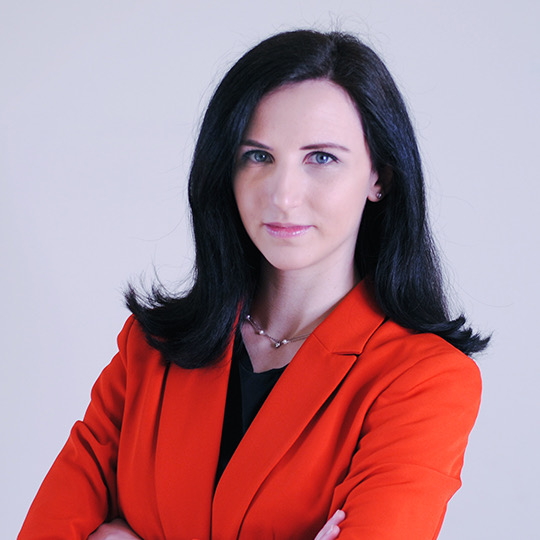
  • Silvia Menegazzi

    Silvia Menegazzi

    Silvia Menegazzi is Head of the AsiaLAB Research Unit and Assistant Professor in the Department of Political Science at Luiss Guido Carli University, where she teaches International Relations and Asian Studies. Her research interests span International Relations, Global Governance, and Area Studies, with a particular focus on the politics and economic development of Asian countries, especially China, Japan, and South Korea.

    She has held visiting scholar positions at Sciences Po (Paris), George Washington University (Washington, DC), the Department of Politics and International Studies (PAIS) at the University of Warwick, and China Foreign Affairs University (CFAU) in Beijing. Dr. Menegazzi has been the recipient of research grants and scholarships from several European and Asian institutions.

    She lived in China for more than four years and is fluent in Mandarin Chinese. Her work has been published in academic journals and media outlets, including International Politics, Global Society, Asia Europe Journal, East Asia Forum, and China Files. Among her most recent publications are China’s Blueprint for Global Leadership: GSI, GDI, GCI and Xi Jinping’s Vision for the International Order (Palgrave Macmillan, 2025, with M. Dian); La Cina e la politica globale (Mondadori, 2023); The NATO–South Korea strategic alignment and contemporary order-building, (International Politics, 2026, with T. Novotna).

  • Alessia Paolillo

    Alessia Paolillo

    Alessia Paolillo holds a PhD in Civilizations of Asia and Africa (La Sapienza), majoring in East Asia studies, 38th cycle, with thesis defense: “For a Critical Analysis of Chinese Political Discourse: ‘Multipolarisation’ in the Academic and Institutional Debate of the PRC in the Early 2000s.” Teaching assistant in Contemporary Chinese History at University of Rome “Sapienza”, and previously Visiting Researcher at the Centre for Asia-Pacific Research at University College Dublin (UCD) in Dublin, Dr. Paolillo conducted extensive research in China and Japan during her doctoral studies. Co-founder of the non-profit organization European Guanxi, she is also a member of the Center for Studies and Documentation on China and East Asia at Roma Tre University (CSDC), the Italian Association of Chinese Studies (AISC), and the European Association for Chinese Studies (EACS). Her research interests lie in the field of Chinese foreign policy, with particular interest in political discourse, the processes of legitimation of the PRC at the international level and the development of Sinocentric IR theories.

  • Emma Bellon

    Emma Bellon

    Emma Bellon holds a Double Master’s Degree in International Affairs from LUISS Guido Carli University and Sciences Po Bordeaux, where she graduated with a thesis on demographic transition in India and its socio-economic impact, tracing pathways to securitisation in national policy and discourse from 1980 to 2025.

    Her research interests focus on India and Southeast Asia, combining demographic and social challenges with critical security studies and the region’s evolving geopolitical dynamics. She has gained professional experience at the Italian Embassy in Bangkok, the Indian Chamber of Commerce in Italy, and CeSI – Centro Studi Internazionali, where she published analyses on the Asia-Pacific. She has a basic knowledge of Hindi.

  • Flavia Lucenti

    Flavia Lucenti

    Flavia Lucenti is a postdoctoral researcher at LUISS University, Department of Political Science, for the EU Horizon Project REMIT.

    Her research interests include IR theory, China, Russia, technology and norms. At LUISS University, Flavia is also PhD tutor and teaching assistant while she is an adjunct professor at the American University of Rome. Previously, she worked as a research assistant at the University of Oxford for the EU Horizon Project EU3D and as a postdoctoral research fellow and adjunct professor at the University of Bologna. Flavia was also an adjunct professor at the University of Roma Tre and a senior teaching assistant in International Relations at the Ca’ Foscari University of Venice.

    She holds a PhD in Political Studies and International Relations from the University of Roma Tre. During her doctoral studies she was a visiting PhD student at the University of Hong Kong, the Moscow State Institute of International Relations and the European University Institute. From 2020 to 2023 she was a member of the Early Career Development Group of the European International Studies Association and in 2022 she was part of the annual cohort of the Next Generation Policy Expert Network, a program launched by Chatham House and the Korea Foundation. Currently, Flavia is a deputy editor for the annual Global Policy: Next Generation issue of the journal Global Policy from Durham University. She holds an MA (Summa cum Laude) in Diplomatic and International Affairs from the University of Bologna – Forlì Campus.

  • Ivan Cardillo

    Ivan Cardillo

    Ivan Cardillo is an Adjunct Professor at China University of Political Science and Law and a Senior Advisor to the ‘Faren’ Think Tank of the Chinese Ministry of Justice. He is also the Director of the Institute of Chinese Law and Chairman of the Italy-China Business Development Forum. Cardillo serves as a scientific expert for the Knowledge Network on China and the EU-China Research and Innovation Dialogue at the European Commission. He has been appointed as an Arbitrator at the Weihai Court of International Arbitration and frequently serves as an expert witness in U.S. judicial cases involving China-related issues. With a background in teaching Chinese law at institutions such as the University of Trento and the University of Eastern Piedmont, Cardillo has published extensively on various aspects of Chinese law. He recently co-edited the book The Chinese Civil Code in the Global Legal Order: Inner and Outer Perspectives (Brill, 2024).

  • Rebecca Iotti

    Rebecca Maria Perla Iotti

    Rebecca Maria Perla Iotti is a PhD candidate at LUISS Guido Carli University. Her research interests intersect across International Relations, Geopolitics, and Political Economy, with a focus on Chinese Economic Statecraft. She previously earned a Master’s degree in Politics and Economics from the University of Bologna and studied at the University of Bologna and Sciences Po Paris. She is currently a Teaching Assistant at LUISS University.

  • Satoko Kawamura

    Satoko Kawamura

    Satoko Kawamura is Professor and Associate Dean at the College and the Graduate School of International Relations of Ritsumeikan University, Kyoto Japan. Deputy Director at the Institute of Humanities, Human and Social Sciences of the Kinugasa Research Organization of Ritsumeikan. Specialized fields: International Relations (Governance of Advanced Technology, Thought of International Relations), International Administration, the Law of International Relations, and the Sociology of International Relations. Currently work: A research about the system of transnational governance and its norms, which are established by not only states or international organizations but also non-state actors that regulate themselves voluntarily. On Global Order: The Resonance of Transborder Thought, Institutions, and Norms published in Japanese is under translation into English. 

  • Stefano Ponzone

    Stefano Ponzone

    Stefano Ponzone holds a Double Master’s Degree in International Relations from LUISS Guido Carli University and China Foreign Affairs University in Beijing, where he spent one year studying Chinese foreign policy and international affairs. His research interests include China’s role in multilateral institutions, technological competition, strategic autonomy, and the evolution of China’s international influence. Alongside his academic activities, he has gained professional experience in international and European environments, including the Italian Ministry of Foreign Affairs and International Cooperation, IFAD, EUROCONTROL, and the European Commission, where he worked as a Blue Book Trainee at DG CONNECT on European digital policies and technological innovation. He is fluent in English and French and has knowledge of Mandarin Chinese.

  • Thomas Christiansen

    Thomas Christiansen

    Thomas Christiansen joined Luiss University as a Professor in the Political Science Department in September 2019. He previously held positions at Maastricht University, at the European Institute of Public Administration, at Aberystwyth University of Wales and at Essex University. He is Executive Editor of the Journal of European Integration and co-editor (with Sophie Vanhoonacker) of the ‘European Administration Governance’ book series at Palgrave Macmillan. He has published widely on different aspects of European Union politics. He recently co-authored, with Emil Kirchner and Uwe Wissenbach, The European Union and China (London: Palgrave, 2019) and co-edited, with Elena Griglio and Nicola Lupo, The Routledge Handbook of Parliamentary Administrations (London: Routledge, 2023).

  • Veronica Strina

    Veronica Strina

    Veronica Strina is an adjunct professor of Chinese language, culture and institutions at the University of Salerno. Her research interests focus on China’s public and cultural diplomacy, with particular attention to the influence of Confucian thought on the PRC’s foreign policy behavior and its visions of the international order. She holds a PhD in Diplomacy and International Cooperation from the University for Foreigners of Perugia, with a dissertation on China’s global role viewed through the lens of its cultural projection and engagements in the Xi Jinping era. She has been a visiting PhD fellow at NATO Defense College, the Defence Studies Department of King’s College London, and the School of Education at Shanghai International Studies University. She has a background in international relations and sinology, with study experiences in China, particularly at Peking University and Fudan University.

  • Xiaotong Zhang

    Xiaotong Zhang

    Prof. Xiaotong Zhang is Professor of Political Science and International Relations at KIMEP University (Kazakhstan), where he serves as Director of the China and Central Asia Studies Center (CCASC). He is Editor-in-Chief of the journal Economic Diplomacy and serves as Series Editor of the Routledge book series Major Powers and Central Asia.

    His research bridges International Relations, International Political Economy, and Political Geography to examine how economic power is reshaping international order in an era of intensifying geopolitical and geoeconomic competition. His work develops an integrated research agenda spanning economic diplomacy, economic statecraft, geoeconomics, economic security, economic warfare, and business diplomacy, with a particular focus on how states, businesses, and regional actors exercise agency and pursue strategic autonomy in a fragmented world.

    Drawing on comparative perspectives across China, the European Union, Central Asia, Eurasia, and the world’s Mediterranean seas, his recent research examines middle powers, multi-vector diplomacy, geopolitical risk, regional order, and changing patterns of international alignment. Combining conceptual innovation with comparative empirical research, he develops new analytical frameworks for understanding the changing geography of economic power.

    Professor Zhang has authored numerous books and co-edited several scholarly volumes. His publications reflect the evolution of his research from European studies and economic diplomacy to economic statecraft, geoeconomics, and business diplomacy. His books include Linkage Power Europe (2023), New Economic Statecraft (2024), China’s Modern Economic Statecraft (2025), and Business Diplomacy (2026). Earlier, he co-edited Deepening the EU–China Partnership (with Mario Telò and Ding Chun, 2018).

    He received his PhD in Political Science from the Université libre de Bruxelles (ULB), Belgium.